Within Cryptozoology
When Cryptid Samples Count as Evidence
Biological samples matter only when their origin, handling, storage, and testing can survive independent scrutiny.
On this page
- What hair and tissue can prove
- Why chain of custody matters
- Known animals in famous sample tests
Page outline Jump by section
Introduction
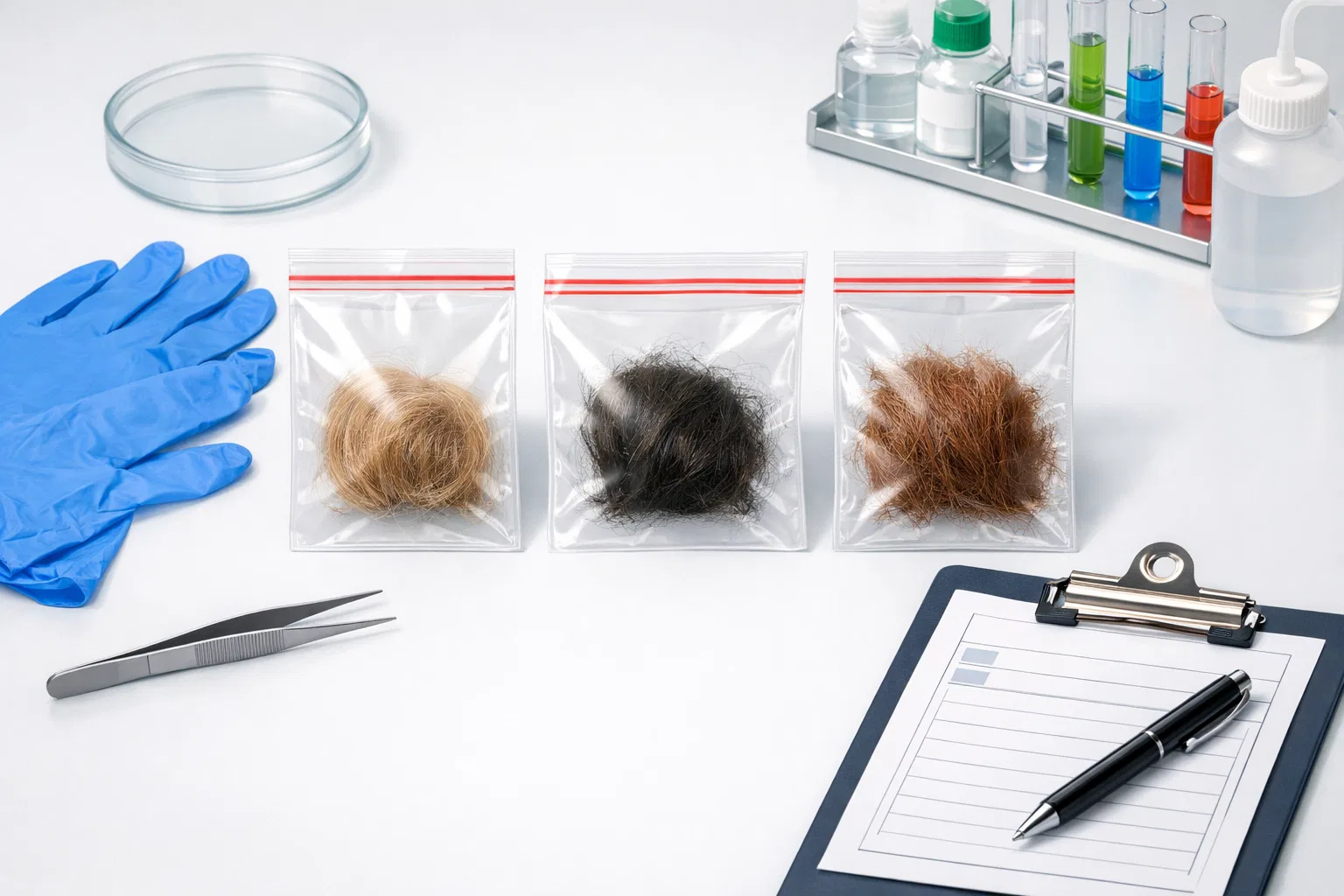
Hair, tissue and other biological samples are often presented as the moment cryptozoology becomes testable: not another footprint, blurry photograph or eyewitness account, but something a laboratory can examine. In practice, a sample counts as evidence only when its origin, handling, storage and testing can survive independent scrutiny. A hair found in a forest, a scrap of skin kept in a private collection or a relic said to be from a yeti may be interesting, but it is not strong evidence unless investigators can show where it came from, who handled it, how contamination was prevented, what laboratory method was used and whether enough material remains for retesting.
That distinction matters because the best-known genetic tests of alleged cryptid material have not confirmed unknown primates or lake monsters. They have mostly identified known animals: bears, deer, dogs, horses, cows, wolves, raccoons, porcupines and humans. The lesson is not that biological testing is useless; it is that testing is powerful precisely because it turns dramatic claims into ordinary, checkable questions about sampling, chain of custody and species identification.[PMC+2ABC News]pmc.ncbi.nlm.nih.govOpen source on nih.gov.
What hair and tissue can prove
Hair and tissue can answer a narrower question than many cryptid headlines suggest. A DNA result can usually identify the animal source of a sample, or show that the sample is too degraded, contaminated or incomplete to interpret. It does not prove that a witness saw what they thought they saw, that a whole population exists, or that every report from a region has the same explanation. A positive cryptid claim would need more than “unusual DNA”: it would need a recoverable sequence, a reliable comparison against known species, transparent methods, independent replication and a credible route from animal to sample.
The 2014 Oxford-Lausanne study led by Bryan Sykes is the clearest example. Researchers invited hair samples attributed to anomalous primates such as yeti, Bigfoot, sasquatch and almasty, then used decontamination and mitochondrial 12S RNA sequencing to identify the species origin of 30 samples. The result was not a new ape. Most samples came from known mammals; two Himalayan samples were reported as having closest affinity with an ancient polar bear lineage, while the rest matched ordinary extant animals.[PMC]pmc.ncbi.nlm.nih.govOpen source on nih.gov.
That study also shows both the value and the limits of cryptid sample testing. It gave believers and sceptics a shared laboratory result, but it did not transform folklore into zoology. Hair without roots may contain little nuclear DNA, old material can be degraded, and mitochondrial DNA identifies maternal lineage rather than providing a full genome. Even when a result is intriguing, it has to be checked against contamination, database gaps and alternative explanations before it becomes evidence for an unknown animal.
A later yeti-related study made the pattern even clearer. Charlotte Lindqvist and colleagues analysed samples described as yeti material, including bone, tooth, skin, hair and faecal material collected in the Himalayas and Tibetan Plateau. Of nine purported yeti specimens, one was identified as dog and the other eight as Asian bears: Asian black bear, Himalayan brown bear and Tibetan brown bear. The work did not simply debunk a claim; it also improved understanding of bear lineages in the region, showing how cryptid-labelled material can still produce useful zoological knowledge when handled scientifically.[Royal Society]royalsociety.orgRoyal Society Mysteries of the yeti | Royal SocietyRoyal Society Mysteries of the yeti | Royal Society
Why chain of custody matters
Chain of custody is the documented history of a sample: who collected it, where and when it was collected, how it was packaged, who received it, where it was stored, when it was opened, and who transferred it to the laboratory. In forensic science, poor chain of custody can make biological evidence inadmissible or unreliable because the sample can no longer be confidently linked to the claimed source. NIST’s biological evidence guidance stresses packaging, maintenance, tracking and preservation after collection, and the NIST/NIJ handbook states that chain-of-custody records should account for movements, changes to packaging, who had custody, who received the evidence, the purpose of transfer and what happened on arrival.[NIST]nist.govHandbook on Biological Evidence PreservationHandbook on Biological Evidence Preservation
Cryptid testing is not usually a court case, but the same logic applies. A sample found in a cabin, kept in a drawer, posted in an envelope, displayed as a relic or passed between enthusiasts can still be tested, yet the result is weaker because the path from alleged animal to laboratory is uncertain. If a hair is said to have come from a Bigfoot encounter but no one can verify where it was collected, whether it was mixed with other animal hair, or whether people handled it without gloves, a laboratory result can identify the material but cannot rescue the original claim.
For a cryptid sample to carry serious evidential weight, the collection record should answer practical questions:<div class="content-enhancement content-enhancement--insight-grid" markdown="1">
- Exact location and context: GPS position, date, weather, habitat, nearby tracks, carcasses, nests, scat, feeding signs or human activity.
- Collection method: sterile tweezers, gloves, clean containers, single-use tools and clear separation from other samples.
- Photographic record: images before collection, during packaging and after sealing, with scale and surroundings.
- Packaging and storage: dry hair in breathable paper packaging where appropriate; wet tissue chilled or frozen according to laboratory advice; no casual plastic-bag storage that encourages mould or degradation.
- Transfer log: names, times, signatures or electronic records for every handover.
- Independent reserve material: enough of the original sample retained for a second laboratory to test.</div>
The contamination problem in cryptid samples
Contamination is not a minor technicality in cryptid testing; it is often the difference between a meaningful result and a false lead. Modern DNA methods are sensitive enough to detect tiny traces from collectors, handlers, domestic animals, museum storage, laboratory reagents or nearby biological material. This is especially important for alleged cryptid evidence because the expected material is often old, small, shed, weathered or handled long before scientific testing.
Good laboratories therefore separate work areas, use validated procedures, document cleaning and decontamination, and apply controls. FBI DNA quality standards require separation of evidence examination, DNA extraction, PCR set-up and amplified DNA areas, along with written cleaning and decontamination procedures. SWGDAM, the Scientific Working Group on DNA Analysis Methods, maintains contamination-prevention and interpretation guidance for forensic DNA laboratories, including mitochondrial DNA guidance relevant to hair and degraded samples.[Federal Bureau of Investigation]ucr.fbi.govFederal Bureau of Investigation
For field cryptozoology, this means a “promising” sample should be treated less like a souvenir and more like fragile trace evidence. Gloves should be changed between items. Tools should be clean or sterile. Samples should be individually sealed. Collectors should avoid breathing, talking or smoking over material. A blank control — for example, an unused swab or a sample from the clean collection surface — can help a laboratory detect contamination or inhibition. The National Institute of Justice notes that substrate controls can help troubleshoot contamination, PCR inhibition and fluorescence interference.[National Institute of Justice]nij.ojp.govOpen source on ojp.gov.
The hardest cases are old trophy-like objects: scalps, skins, bones, teeth, relics and museum pieces with colourful histories. These can still be scientifically useful, but their evidential value depends on provenance. A monastery relic, private collection specimen or decades-old “mystery hair” may produce DNA, yet the result must be interpreted alongside its storage history and the possibility that it came from a known animal, was repaired, was contaminated, or was mislabelled long before testing.
Known animals in famous sample tests
The most important pattern in cryptid sample testing is not that every case is a hoax. It is that biological material often comes from a real animal, just not the animal claimed. That is why sample testing can be valuable even when it disappoints believers: it replaces a vague mystery with a specific identification.
What a credible cryptid sample protocol would look like
A stronger cryptid sample system would not begin with the laboratory. It would begin at the collection site, because once a sample is mixed, degraded, mislabelled or casually handled, later technology cannot fully restore its evidential value. The aim should be to make the boring paperwork as strong as the biological claim.
A practical protocol would have four decision points.
First, collect only what can be documented. A single hair on a jacket, fence or branch may be worth preserving, but only if the collector records the context before touching it. The most valuable sample is not necessarily the strangest-looking one; it is the one with the clearest origin, best photographs, least handling and most secure packaging.
Second, separate identification from interpretation. The laboratory should be asked a narrow question: what species is this sample consistent with? It should not be asked to confirm Bigfoot, yeti or any other named cryptid. This reduces bias and keeps the result tied to the data.
Third, require independent replication for extraordinary results. If a test produces an unusual sequence, the next step is not publicity. It is re-extraction, contamination review, database comparison and testing by an independent accredited laboratory using retained material. FBI standards and broader forensic practice emphasise validated methods, documented controls and retained evidence where possible; cryptid investigations need the same discipline if they want scientific attention.[Federal Bureau of Investigation]ucr.fbi.govFederal Bureau of Investigation
Fourth, publish enough detail to be checked. A convincing report should include sample provenance, collection notes, laboratory accreditation or competence, extraction methods, primers or sequencing approach, controls, database comparisons, raw or deposited sequence data where appropriate, and a plain statement of uncertainty. A claim that “the lab said unknown” is not enough, because “unknown” may mean degraded, contaminated, not in the database, not interpretable, or simply not identified by that particular method.
Why weak sample handling keeps cryptid claims unresolved
Cryptozoology often treats biological samples as the way out of endless argument, but poor sample handling can simply move the argument into the laboratory. A believer may say a result was dismissed because scientists are closed-minded. A sceptic may say the sample was never credible. Both debates become harder to resolve when the chain of custody is missing.
The strongest cryptid-testing lesson is therefore procedural rather than dramatic: evidence must be made auditable before the result arrives. A hair with an unbroken chain of custody, clean collection, proper storage, validated testing and retained material can meaningfully change a discussion. A hair with a legendary story but no provenance is usually only a mystery object.
This does not make biological testing hostile to cryptozoology. It gives cryptozoology its clearest route to being taken seriously. If an unknown animal exists, it should leave biological traces that can be collected, protected and retested. Until then, the record from famous sample tests points in a consistent direction: alleged cryptid material usually becomes evidence for known animals, contaminated or degraded samples, or local folklore built around real wildlife rather than proof of an undiscovered large creature.
Amazon book picks
Further Reading
Books and field guides related to When Cryptid Samples Count as Evidence. Use these as the next step if you want deeper reading beyond the article.
Field Guide To Bigfoot, Yeti, & Other Mystery Primates Worldwide
Offers context for biological sample claims.
eBay marketplace picks
Marketplace Samples
Live-tested eBay searches with available results related to this page.
Endnotes
1.
Source: pmc.ncbi.nlm.nih.gov
Link:https://pmc.ncbi.nlm.nih.gov/articles/PMC4100498/
2.
Source: nist.gov
Title: Handbook on Biological Evidence Preservation
Link:https://www.nist.gov/system/files/documents/forensics/NIST-IR-7928.pdf
3.
Source: nist.gov
Title: Biological Evidence Guidance | NIST
Link:https://www.nist.gov/forensic-science/interdisciplinary-topics/evidence-management/biological-evidence-guidance
4.
Source: ucr.fbi.gov
Title: Federal Bureau of Investigation
Link:https://ucr.fbi.gov/lab/biometric-analysis/codis/quality-assurance-standards-for-forensic-dna-testing-laboratories
5.
Source: swgdam.org
Title: PUBLICATIONS | swgdam
Link:https://www.swgdam.org/publications
6.
Source: nist.gov
Link:https://www.nist.gov/document/forensic-laboratory-standards-prevention-monitoring-and-mitigation-dna-contamination
7.
Source: vault.fbi.gov
Link:https://vault.fbi.gov/bigfoot/Bigfoot%20Part%2001%20%28Final%29/at_download/file
8.
Source: history.com
Title: bigfoot fbi file investigation discovery
Link:https://www.history.com/articles/bigfoot-fbi-file-investigation-discovery
9.
Source: time.com
Title: bigfoot dna bear animal
Link:https://time.com/2949457/bigfoot-dna-bear-animal/
10.
Source: abcnews.com
Link:https://abcnews.com/US/fbi-unveils-documents-related-1970s-bigfoot-investigation/story?id=63511477
11.
Source: royalsocietypublishing.org
Link:https://royalsocietypublishing.org/doi/abs/10.1098/rspb.2014.0161
12.
Source: royalsociety.org
Title: Royal Society Mysteries of the yeti | Royal Society
Link:https://royalsociety.org/blog/2017/11/mysteries-of-the-yeti/
13.
Source: nij.ojp.gov
Link:https://nij.ojp.gov/nij-hosted-online-training-courses/crime-scene-and-dna-basics-forensic-analysts/evidence-crime-scene/collection-techniques
14.
Source: otago.ac.nz
Title: first edna study of loch ness points to something fishy
Link:https://www.otago.ac.nz/news/newsroom/first-edna-study-of-loch-ness-points-to-something-fishy
15.
Source: cfslchandigarh.gov.in
Link:https://www.cfslchandigarh.gov.in/Uploads/[Media
16.
Source: royalsocietypublishing.org
Link:https://royalsocietypublishing.org/rspb/article/284/1868/20171804/78775/Evolutionary-history-of-enigmatic-bears-in-the
17.
Source: royalsocietypublishing.org
Title: Ancient DNA reveals multiple origins and migration
Link:https://royalsocietypublishing.org/rsos/article/8/8/210518/96399/Ancient-DNA-reveals-multiple-origins-and-migration
18.
Source: pmc.ncbi.nlm.nih.gov
Link:https://pmc.ncbi.nlm.nih.gov/articles/PMC4121952/
19.
Source: pubmed.ncbi.nlm.nih.gov
Link:https://pubmed.ncbi.nlm.nih.gov/24990672/
20.
Source: pmc.ncbi.nlm.nih.gov
Link:https://pmc.ncbi.nlm.nih.gov/articles/PMC10833102/
21.
Source: pmc.ncbi.nlm.nih.gov
Link:https://pmc.ncbi.nlm.nih.gov/articles/PMC10000967/
22.
Source: pmc.ncbi.nlm.nih.gov
Link:https://pmc.ncbi.nlm.nih.gov/articles/PMC4298200/
23.
Source: otago.ac.nz
Title: otago scientist reveals loch ness monster could be a giant eel
Link:https://www.otago.ac.nz/news/newsroom/otago-scientist-reveals-loch-ness-monster-could-be-a-giant-eel
24.
Source: abcnews.com
Title: new bigfoot evidence screened as expert claims proof of existence
Link:https://abcnews.com/blogs/technology/2013/10/new-bigfoot-evidence-screened-as-expert-claims-proof-of-existence
25.
Source: illumina.com
Title: loch ness edna
Link:https://www.illumina.com/company/news-center/feature-articles/loch-ness-edna.html
Additional References
26.
Source: youtube.com
Title: Evidence of the Yeti | National Geographic
Link:https://www.youtube.com/watch?v=LZnAo_2cpYY
27.
Source: researchgate.net
Link:https://www.researchgate.net/publication/283265260_The_Biological_Evidence_Handbook_Best_Practices_for_Evidence_Handlers
28.
Source: researchgate.net
Link:https://www.researchgate.net/publication/263583915_Correction_to_Genetic_analysis_of_hair_samples_attributed_to_yeti_bigfoot_and_other_anomalous_primates
29.
Source: facebook.com
Link:https://www.facebook.com/culturacolectivaplus/posts/a-few-years-ago-the-university-of-oxford-gathered-a-group-of-geneticists-and-zoo/2545206075496840/
30.
Source: facebook.com
Link:https://www.facebook.com/groups/expeditionbigfoot/posts/9764313963658463/
31.
Source: reddit.com
Link:https://www.reddit.com/r/bigfoot/comments/mgojf0/dna_study_from_nabigfootsearch/
32.
Source: puregoldforensics.com
Link:https://www.puregoldforensics.com/evidence-handling-guidelines/
33.
Source: scribd.com
Link:https://www.scribd.com/document/412488107/FBI-records-on-Bigfoot
34.
Source: reddit.com
Link:https://www.reddit.com/r/bigfoot/comments/1j91zzo/first_bigfoot_dna_study/
35.
Source: researchgate.net
Link:https://www.researchgate.net/publication/269695589Himalayan%27yeti%27DNA_Polar_bear_or_DNA_degradation_A_comment_on%27Genetic_analysis_of_hair_samples_attributed_to_Yeti%27_by_Sykes_et_al_2014
Topic Tree