Cryptids, Evidence, and the Animals We Imagine
Cryptozoology is the search for animals whose existence has been reported but not confirmed by mainstream zoology: Bigfoot, the Loch Ness Monster, the Yeti, sea serpents, surviving “prehistoric” creatures and other disputed animals often called cryptids. Its appeal is easy to understand.
Page outline Jump by section
Introduction
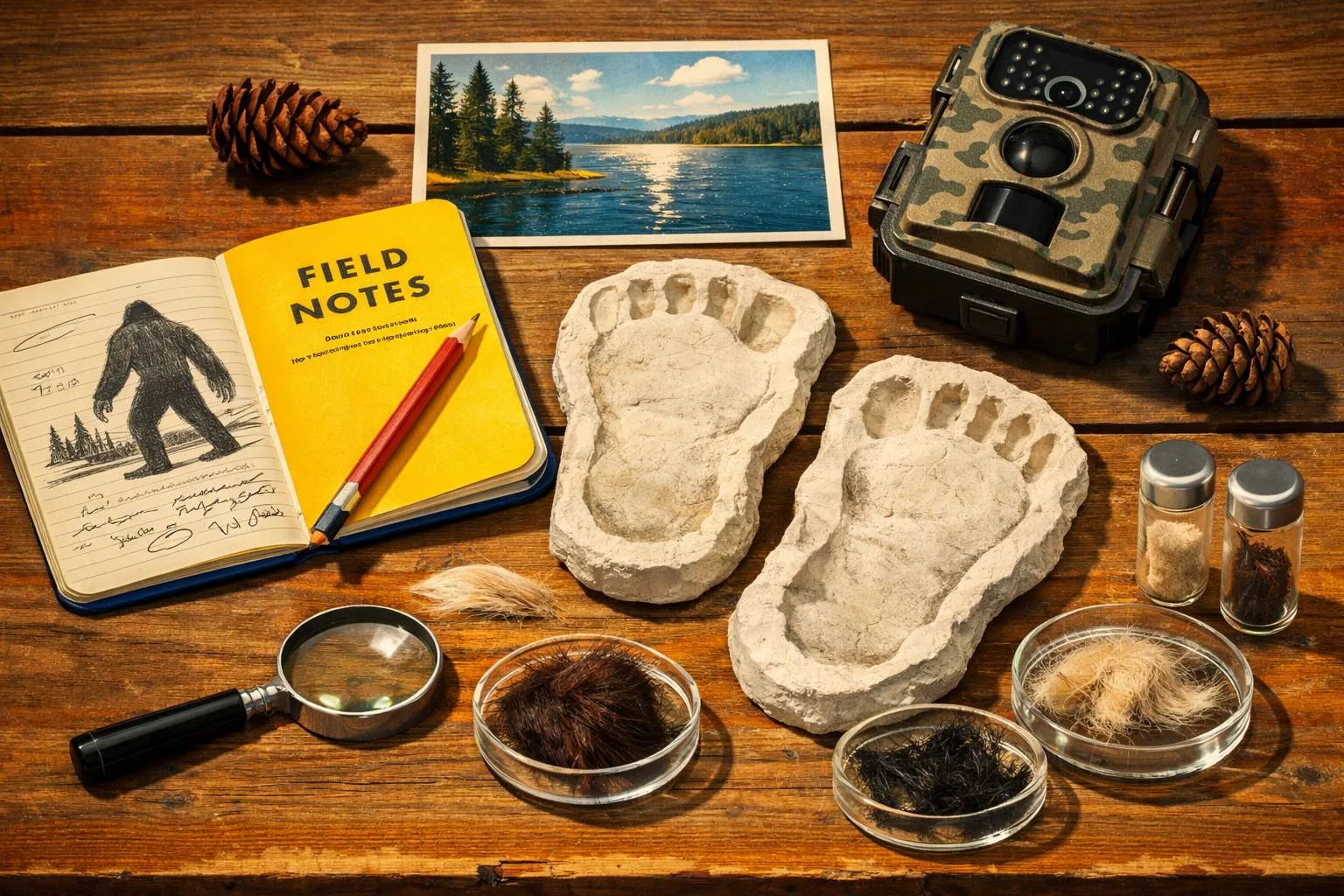
That does not mean every report of an unknown animal is worthless. New species are still described, and some animals once unknown to science — most famously the coelacanth and the okapi — became real zoological discoveries. The problem is that “unknown to science” and “legendary animal is probably real” are not the same claim. Cryptozoology is most useful when treated as a set of questions: What exactly was reported? Is there testable evidence? Could a known animal, hoax, misidentification or story tradition explain it? What would count as proof?[Natural History Museum+2Smithsonian Ocean]nhm.ac.ukOpen source on nhm.ac.uk.
What cryptozoology studies — and why the definition matters
The word is usually used for the study or pursuit of “hidden animals”, especially creatures reported in eyewitness accounts, folklore, local tradition or popular legend but not accepted as valid species. Bigfoot in North America, the Yeti in the Himalayas, the Loch Ness Monster in Scotland and large lake or sea monsters are the classic examples. Supporters may frame the field as open-minded zoological investigation; critics argue that it often begins with a desired conclusion and then collects weak or ambiguous evidence around it.[Wikipedia+2cryptozoologymuseum.com]WikipediaOpen source on wikipedia.org.
A useful distinction is between three different things that are often blurred together:<div class="content-enhancement content-enhancement--insight-grid" markdown="1">
- Undiscovered species: animals not yet formally described by science. These are real and common, especially among insects, marine life, small mammals, reptiles and organisms in under-surveyed habitats.
- Lazarus taxa: animals known from fossils or older records, later found alive after being presumed extinct, such as the coelacanth.
- Cryptids: reported creatures whose existence remains unverified, often with a strong folklore or popular-culture identity.</div>
Cryptozoology gains plausibility from the first two categories, but most famous cryptids belong to the third. The existence of unknown frogs, deep-sea squid or rare forest mammals does not automatically make a giant ape in North America, a surviving plesiosaur in Loch Ness or a dinosaur in the Congo likely. Each claim has to meet its own evidential burden.[Smithsonian Ocean+2Mongabay News]ocean.si.eduOpen source on si.edu.
How cryptozoology became a modern subculture
Modern cryptozoology is usually traced to the mid-twentieth century, especially the work of Bernard Heuvelmans and Ivan T. Sanderson. Heuvelmans’ 1955 book on unknown animals helped give the subject a more systematic identity, and later organisations and publications tried to present cryptozoology as a serious research field. The International Society of Cryptozoology, founded in the early 1980s, is often cited as one attempt to professionalise the subject, although it did not turn cryptozoology into a recognised branch of zoology.[Wikipedia+2IUScholarWorks]WikipediaOpen source on wikipedia.org.
The field also grew through books, television, museum displays, local tourism and internet communities. That shift matters because cryptozoology is no longer only a claim about animals; it is also a participatory culture. People trade sightings, compare tracks, upload trail-camera images, debate old photographs and treat local monsters as part of regional identity. Folklore scholars have argued that cryptids work as modern legendary beings: they help communities talk about wilderness, danger, loss, mystery and distrust of official knowledge.[MDPI+2Penn State]mdpi.comOpen source on mdpi.com.
This cultural life does not prove cryptids exist, but it explains why the subject persists even after weak evidence is challenged. A disproved photograph or failed DNA test may settle a narrow scientific question, yet the wider story often survives because it is entertaining, identity-forming and emotionally satisfying.[Penn State]pure.psu.educryptozoology in the medieval and modern worldsPenn StateCryptozoology in the medieval and modern worldsby P Dendle · 2006 · Cited by 86 — Popular interest in cryptozoology (the study…
Why mainstream science remains sceptical
The strongest scientific objection to famous cryptids is not simply “we have not found one yet”. It is that large animals leave traces. A real breeding population needs food, habitat, mates and generations of survival. It normally leaves bodies, bones, droppings, hair, DNA, photographs, ecological effects or reliable repeated observations. For a large land mammal, lake monster or surviving prehistoric reptile to remain hidden for decades or centuries, the absence of hard biological evidence becomes more significant over time.[Skeptical Inquirer]skepticalinquirer.orgOpen source on skepticalinquirer.org.
Cryptozoological evidence often falls into categories that are interesting but weak on their own:
- Eyewitness testimony: sincere reports can be mistaken, especially in poor light, at distance or under stress.
-
Footprints and tracks: these can be hoaxed, distorted by mud or snow, or misread without associated biological material.<div class="content-enhancement content-enhancement--insight-grid" markdown="1">
- Photographs and video: many are blurry, edited, ambiguous or lack scale and provenance.
- Hair and tissue claims: useful only if chain of custody and DNA testing are strong.
- Local stories: valuable as folklore and ethnographic evidence, but not the same as zoological proof.</div>
What DNA testing has shown in famous cases
DNA has become one of the clearest ways to test cryptozoological claims because it can identify biological samples that once depended on appearance or anecdote. A major 2014 study in Proceedings of the Royal Society B analysed hair samples attributed to Yeti, Bigfoot and other “anomalous primates”. The tested samples did not confirm an unknown ape. They matched known animals such as bears, horses, cows and other mammals, with later debate over whether some Himalayan samples reflected unusual bear lineages or degraded DNA rather than a cryptid.[Royal Society Publishing+2PMC]royalsocietypublishing.orgOpen source on royalsocietypublishing.org.
The Loch Ness Monster has also been tested with environmental DNA, or eDNA, which surveys genetic material shed into water by animals living in an environment. In 2019, a team led by Neil Gemmell reported no evidence for large reptiles, sharks, catfish or sturgeon in Loch Ness samples, but did find abundant eel DNA. Gemmell’s cautious conclusion was not “Nessie is real”; it was that the data could not rule out large eels as one possible contributor to some sightings, while several popular monster theories were unsupported by the DNA evidence.[The Guardian]theguardian.comThe Guardian Loch Ness monster could be a giant eel, say scientistsThe Guardian Loch Ness monster could be a giant eel, say scientists
These studies show the value of bringing cryptid claims into contact with ordinary science. They do not prove that every reported creature is impossible, but they do narrow the field. Claims that once sounded dramatic become more modest: a “monster” may become an eel, a Yeti sample may become a bear, and a mysterious hair may become a horse, cow or human.[PMC]pmc.ncbi.nlm.nih.govOpen source on nih.gov.
The coelacanth and okapi: real discoveries, often misused
Cryptozoology supporters often point to the coelacanth as proof that science can be wrong about “impossible” animals. The coelacanth was known from fossils and thought to have vanished around the end of the Cretaceous period, until a living specimen was found off South Africa in 1938. That discovery was genuinely remarkable. The Natural History Museum and Smithsonian both describe it as one of the most famous “living fossil” stories, and two living species are now recognised.[Natural History Museum+2Smithsonian Ocean]nhm.ac.ukOpen source on nhm.ac.uk.
The okapi is another common example. Known to local people in central Africa but unknown to European science until the early twentieth century, it was formally described after skins and remains reached zoologists. The American Museum of Natural History records the okapi as a recently discovered animal of major interest to early Congo expeditions, with 1901 as the key date in its scientific recognition.[American Museum of Natural History]amnh.orgOpen source on amnh.org.
These examples are important, but they cut both ways. They show that surprising animals can be recognised when physical evidence reaches scientists. They also show what confirmation looks like: specimens, anatomy, taxonomy, locality, comparison with known animals and continued biological study. The coelacanth and okapi did not become real because people believed strongly in them; they became real because evidence crossed the threshold from story to specimen. Smithsonian Ocean+2American Museum of Natural History[ocean.si.edu]ocean.si.eduOpen source on si.edu.
Bigfoot, Nessie and the problem of scale
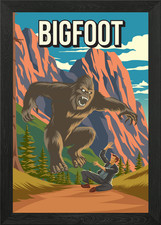
Bigfoot remains the most famous North American cryptid: a large, upright, hairy, ape-like creature said to inhabit forests, especially in the Pacific Northwest. The difficulty is ecological. A breeding population of large primates would need a viable number of individuals spread across habitat, leaving repeated biological traces. Yet despite decades of reports, films, tracks and expeditions, no confirmed body, skeleton, DNA sample or fossil evidence has established such an animal.[Live Science+2Skeptical Inquirer]livescience.comLive Science Rumor or Reality: The Creatures of CryptozoologyLive Science Rumor or Reality: The Creatures of Cryptozoology
The Loch Ness Monster faces a different but related problem. Loch Ness is large, deep and visually dramatic, but it is still a bounded freshwater environment. A surviving plesiosaur-like animal would require not just one long-lived monster but a breeding population sustained over immense time. The 2019 eDNA work made a prehistoric reptile or large exotic fish explanation still less likely, while leaving room for more ordinary explanations such as eels, waves, floating debris, swimming deer, birds, optical effects, hoaxes and expectation-driven perception.[The Guardian+2University of Otago]theguardian.comThe Guardian Loch Ness monster could be a giant eel, say scientistsThe Guardian Loch Ness monster could be a giant eel, say scientists
The scale issue is why small, remote or marine unknown animals are usually more plausible than famous giant cryptids. A new deep-sea invertebrate or small forest mammal can evade notice because its habitat is hard to survey and its traces are limited. A giant ape or lake monster is a much larger claim, so it needs much stronger evidence.[National Geographic]nationalgeographic.comantarctic squid filmed alive first videoantarctic squid filmed alive first video
Cryptozoology as folklore, media and local identity
Even when cryptids are not accepted as animals, they can be important as stories. Folklorists study cryptids because they reveal how people imagine wilderness, boundaries and uncertainty. A monster in a lake can become a tourist emblem; a forest giant can stand for the possibility that modern maps have not fully tamed nature; an “alien big cat” can express anxieties about rural change, authority and escaped exotic animals.[MDPI+2Penn State]mdpi.comOpen source on mdpi.com.
Media has amplified this effect. Television series, podcasts, internet forums and local news segments keep cryptids visible, often blending investigation, entertainment and belief. A 2024 study of media messages and public beliefs about cryptozoology noted the continuing prominence of Bigfoot, Loch Ness and other cryptids across television, documentaries and news coverage. That visibility can make a claim feel more evidenced than it is, because repetition is easily mistaken for confirmation.[International Journal of Communication]ijoc.orgOpen source on ijoc.org.
This is where a fair reading of cryptozoology becomes possible. As zoology, its famous claims usually fail to meet scientific standards. As folklore and popular culture, it is rich, durable and worthy of study. The mistake is to confuse cultural importance with biological proof.
How to assess a cryptid claim without dismissing it too quickly
A good cryptid assessment starts with the same question a field biologist, historian or investigator would ask: what is the best available evidence, and what else could explain it? The answer should not depend on whether the creature would be exciting. It should depend on whether the claim produces testable, independent and biologically coherent evidence.
Useful criteria include:<div class="content-enhancement content-enhancement--step-flow" markdown="1">
- Physical evidence: Is there a body, bone, tooth, tissue, hair with reliable DNA, scat, nest or other biological material?
- Chain of custody: Can the sample’s origin be documented, or could it have been contaminated, planted or misidentified?
- Repeatability: Are there independent observations from trained observers under good conditions?
- Ecology: Could the habitat support a breeding population of the proposed animal?
- Fit with known species: Could a bear, eel, seal, deer, large fish, escaped pet, bird, log, wave or shadow explain the report?
- Historical development: Did the creature’s description change after books, films, photographs or local tourism shaped expectations?
- Predictive value: Does the claim lead to successful searches, or only reinterpret old ambiguous material?</div>
These criteria do not require cynicism. They require proportion. A blurry shape in a lake is not nothing, but it is not a plesiosaur. A footprint is worth recording, but without biological material or a clear trackway it is weak. A sincere witness may be honest and still mistaken.[PMC+2University of Otago]pmc.ncbi.nlm.nih.govOpen source on nih.gov.
What cryptozoology gets right — and where it goes wrong
Cryptozoology gets one broad instinct right: the natural world is not fully known. New species are still discovered, deep habitats remain difficult to survey, and local ecological knowledge can matter. History contains real cases where animals familiar to local communities were recognised late by Western science. The okapi is a good example of that gap between local knowledge and formal taxonomy.[American Museum of Natural History]amnh.orgOpen source on amnh.org.
Where cryptozoology often goes wrong is in treating possibility as probability. It is possible that an unknown animal exists somewhere; it does not follow that any famous cryptid is likely. The more extraordinary the creature, the more evidence it must produce. A small nocturnal mammal in a remote forest and a population of giant unknown primates in North America are not equivalent claims.[Skeptical Inquirer]skepticalinquirer.orgcryptozoology and pseudoscienceSkeptical InquirerCryptozoology and Pseudoscience23 May 2012 — (For more on this in the context of Bigfoot research specifically, see Bri…
The best version of cryptozoology would look less like monster-hunting and more like careful natural history: documenting local reports, preserving samples properly, testing DNA openly, publishing negative results, consulting ecologists and folklorists, and letting evidence change the conclusion. The weakest version begins with the monster and treats every ambiguity as support. Recent proposals to reframe cryptozoology as an integrative field acknowledge this problem by suggesting different methods for different kinds of claims: eDNA for possible biological taxa, ethnography for folklore-heavy reports, perceptual studies for strange experiences and forensic analysis for contested images.[journalofscientificexploration.org]journalofscientificexploration.orgRediscovering Cryptozoology as an Integrative ScienceRediscovering Cryptozoology as an Integrative Science
The bottom line
See on Amazon</a></div></div></article><article class="fr-book-card"><a class="fr-book-cover" href="https://www.amazon.com/s?k=The+United+States+of+Cryptids+by+J.+W.+Ocker&i=stripbooks&tag=searcht-20" target="_blank" rel="sponsored noopener noreferrer" aria-label="Open The United States of Cryptids on Amazon"><span class="fr-book-cover-fallback">Book</span><img class="fr-book-cover-thumb" src="https://books.google.com/books/content?id=j8DVEQAAQBAJ&printsec=frontcover&img=1&zoom=1&edge=curl&source=gbs_api" alt="Cover for The United States of Cryptids" loading="lazy" decoding="async" fetchpriority="low" referrerpolicy="no-referrer" onerror="this.hidden=true;this.closest('.fr-book-cover').classList.add('fr-book-cover-placeholder');"></a><div class="fr-book-info"><h4 class="fr-book-title"><a href="https://www.amazon.com/s?k=The+United+States+of+Cryptids+by+J.+W.+Ocker&i=stripbooks&tag=searcht-20" target="_blank" rel="sponsored noopener noreferrer" title="The United States of Cryptids">The United States of Cryptids</a></h4><p class="fr-book-author">By J. W. Ocker</p><p class="fr-book-desc">Covers a wide range of cryptid legends and reports.</p><div class="fr-book-actions"><a href="https://www.amazon.com/s?k=The+United+States+of+Cryptids+by+J.+W.+Ocker&i=stripbooks&tag=searcht-20" class="fr-amazon-btn" target="_blank" rel="sponsored noopener noreferrer">
See on Amazon</a></div></div></article><article class="fr-book-card"><a class="fr-book-cover" href="https://www.amazon.com/s?k=Hunting+Monsters+by+Darren+Naish&i=stripbooks&tag=searcht-20" target="_blank" rel="sponsored noopener noreferrer" aria-label="Open Hunting Monsters on Amazon"><span class="fr-book-cover-fallback">Book</span><img class="fr-book-cover-thumb" src="https://books.google.com/books/content?id=mN2oCwAAQBAJ&printsec=frontcover&img=1&zoom=1&edge=curl&source=gbs_api" alt="Cover for Hunting Monsters" loading="lazy" decoding="async" fetchpriority="low" referrerpolicy="no-referrer" onerror="this.hidden=true;this.closest('.fr-book-cover').classList.add('fr-book-cover-placeholder');"></a><div class="fr-book-info"><h4 class="fr-book-title"><a href="https://www.amazon.com/s?k=Hunting+Monsters+by+Darren+Naish&i=stripbooks&tag=searcht-20" target="_blank" rel="sponsored noopener noreferrer" title="Hunting Monsters">Hunting Monsters</a></h4><p class="fr-book-author">By Darren Naish</p><p class="fr-book-desc">Explores how cryptid claims are investigated and evaluated.</p><div class="fr-book-actions"><a href="https://www.amazon.com/s?k=Hunting+Monsters+by+Darren+Naish&i=stripbooks&tag=searcht-20" class="fr-amazon-btn" target="_blank" rel="sponsored noopener noreferrer">
See on Amazon</a></div></div></article><article class="fr-book-card"><a class="fr-book-cover" href="https://www.amazon.com/s?k=Field+Guide+To+Bigfoot%2C+Yeti%2C+%26+Other+Mystery+Primates+Worldwide+by+Loren+Coleman&i=stripbooks&tag=searcht-20" target="_blank" rel="sponsored noopener noreferrer" aria-label="Open Field Guide To Bigfoot, Yeti, & Other Mystery Primates Worldwide on Amazon"><span class="fr-book-cover-fallback">Book</span><img class="fr-book-cover-thumb" src="https://books.google.com/books/content?id=XhJdHgAACAAJ&printsec=frontcover&img=1&zoom=1&source=gbs_api" alt="Cover for Field Guide To Bigfoot, Yeti, & Other Mystery Primates Worldwide" loading="lazy" decoding="async" fetchpriority="low" referrerpolicy="no-referrer" onerror="this.hidden=true;this.closest('.fr-book-cover').classList.add('fr-book-cover-placeholder');"></a><div class="fr-book-info"><h4 class="fr-book-title"><a href="https://www.amazon.com/s?k=Field+Guide+To+Bigfoot%2C+Yeti%2C+%26+Other+Mystery+Primates+Worldwide+by+Loren+Coleman&i=stripbooks&tag=searcht-20" target="_blank" rel="sponsored noopener noreferrer" title="Field Guide To Bigfoot, Yeti, & Other Mystery Primates Worldwide">Field Guide To Bigfoot, Yeti, & Other Mystery Primates Worldwide</a></h4><p class="fr-book-author">By Loren Coleman, Harry Trumbore et al.</p><p class="fr-book-desc">Focuses on one of the largest cryptid categories.</p><div class="fr-book-actions"><a href="https://www.amazon.com/s?k=Field+Guide+To+Bigfoot%2C+Yeti%2C+%26+Other+Mystery+Primates+Worldwide+by+Loren+Coleman&i=stripbooks&tag=searcht-20" class="fr-amazon-btn" target="_blank" rel="sponsored noopener noreferrer">
See on Amazon</a></div></div></article></div><div class="fr-section-footer"><div class="fr-browse-links" aria-label="Browse more on Amazon"><span class="fr-browse-links-label">Browse more on Amazon:</span><a class="fr-browse-more" href="https://www.amazon.com/s?k=Abominable+Science%21&i=stripbooks&tag=searcht-20" target="_blank" rel="sponsored noopener noreferrer">Abominable Science!</a><a class="fr-browse-more" href="https://www.amazon.com/s?k=The+United+States+of+Cryptids&i=stripbooks&tag=searcht-20" target="_blank" rel="sponsored noopener noreferrer">The United States of Cryptids</a><a class="fr-browse-more" href="https://www.amazon.com/s?k=Hunting+Monsters&i=stripbooks&tag=searcht-20" target="_blank" rel="sponsored noopener noreferrer">Hunting Monsters</a></div><p class="fr-disclosure">As an Amazon Associate I earn from qualifying purchases.</p></div></div></section>
Amazon book picks
Further Reading
Books and field guides related to Cryptids, Evidence, and the Animals We Imagine. Use these as the next step if you want deeper reading beyond the article.
Abominable Science!
Directly examines cryptozoology, evidence claims, and famous cryptids.
Field Guide To Bigfoot, Yeti, & Other Mystery Primates Worldwide
Focuses on one of the largest cryptid categories.
eBay marketplace picks
Marketplace Samples
Live-tested eBay searches with available results related to this page.

Endnotes
1.
Source: Wikipedia
Link:https://en.wikipedia.org/wiki/Cryptozoology
2.
Source: cryptozoologymuseum.com
Link:https://cryptozoologymuseum.com/about-icm/
3.
Source: news.mongabay.com
Title: beyond bigfoot the science of cryptozoology
Link:https://news.mongabay.com/2012/03/beyond-bigfoot-the-science-of-cryptozoology/
4.
Source: pmc.ncbi.nlm.nih.gov
Link:https://pmc.ncbi.nlm.nih.gov/articles/PMC4100498/
5.
Source: mdpi.com
Link:https://www.mdpi.com/2076-0787/13/1/1
6.
Source: journalofscientificexploration.org
Title: Rediscovering Cryptozoology as an Integrative Science
Link:https://journalofscientificexploration.org/index.php/jse/article/view/3937/2557
7.
Source: cryptozoologymuseum.com
Link:https://cryptozoologymuseum.com/what-is-cryptozoology/
8.
Source: Wikipedia
Title: International Society of Cryptozoology
Link:https://en.wikipedia.org/wiki/International_Society_of_Cryptozoology
9.
Source: Wikipedia
Title: Loch Ness Monster
Link:https://en.wikipedia.org/wiki/Loch_Ness_Monster
10.
Source: pure.psu.edu
Title: cryptozoology in the medieval and modern worlds
Link:https://pure.psu.edu/en/publications/cryptozoology-in-the-medieval-and-modern-worlds/
11.
Source: skepticalinquirer.org
Title: cryptozoology and pseudoscience
Link:https://skepticalinquirer.org/newsletter/cryptozoology-and-pseudoscience/
12.
Source: nhm.ac.uk
Link:https://www.nhm.ac.uk/discover/coelacanths-the-fish-that-outdid-the-loch-ness-monster.html
13.
Source: ocean.si.edu
Link:https://ocean.si.edu/ocean-life/fish/coelacanth
14.
Source: amnh.org
Link:https://www.amnh.org/research/research-library/virtual-resources/congo
15.
Source: scholarworks.iu.edu
Link:https://scholarworks.iu.edu/journals/index.php/cl/article/view/41746/44352
16.
Source: scholarworks.iu.edu
Link:https://scholarworks.iu.edu/journals/index.php/cl/article/download/41746/44352/127896
17.
Source: ijoc.org
Link:https://ijoc.org/index.php/ijoc/article/download/21417/4444
18.
Source: skepticalinquirer.org
Link:https://skepticalinquirer.org/2015/11/the-search-for-negative-evidence/
19.
Source: retractionwatch.com
Title: bigfoot paper corrected because it doesnt exist the authors institution that is
Link:https://retractionwatch.com/2015/04/14/bigfoot-paper-corrected-because-it-doesnt-exist-the-authors-institution-that-is/
20.
Source: royalsocietypublishing.org
Link:https://royalsocietypublishing.org/doi/abs/10.1098/rspb.2014.0161
21.
Source: theguardian.com
Title: The Guardian Loch Ness monster could be a giant eel, say scientists
Link:https://www.theguardian.com/science/2019/sep/05/loch-ness-monster-could-be-a-giant-eel-say-scientists
22.
Source: otago.ac.nz
Title: otago scientist reveals loch ness monster could be a giant eel
Link:https://www.otago.ac.nz/news/newsroom/otago-scientist-reveals-loch-ness-monster-could-be-a-giant-eel
23.
Source: amnh.org
Link:https://www.amnh.org/explore/videos/shelf-life/coelacanth-discovery-preservation
24.
Source: livescience.com
Title: Live Science Rumor or Reality: The Creatures of Cryptozoology
Link:https://www.livescience.com/11328-rumor-reality-creatures-cryptozoology.html
25.
Source: skepticalinquirer.org
Link:https://skepticalinquirer.org/2023/12/is-bigfoot-dead/
26.
Source: nationalgeographic.com
Title: antarctic squid filmed alive first video
Link:https://www.nationalgeographic.com/animals/article/antarctic-squid-filmed-alive-first-video
27.
Source: cryptidarchives.fandom.com
Title: Bernard Heuvelmans
Link:https://cryptidarchives.fandom.com/wiki/Bernard_Heuvelmans
28.
Source: academic.oup.com
Link:https://academic.oup.com/columbia-scholarship-online/book/23261
29.
Source: youtube.com
Link:https://www.youtube.com/watch?v=CcOEijIqiAM
30.
Source: facebook.com
Link:https://www.facebook.com/naturalhistorymuseum/posts/this-fish-swam-so-far-under-the-radar-for-66-million-years-people-thought-it-was/870335748465326/
31.
Source: guides.library.queensu.ca
Link:https://guides.library.queensu.ca/STEMbookdisplays/cryptozoology
32.
Source: nationalgeographic.com
Title: 130907 cryptid crytozoology bigfoot loch yeti monster abominable science
Link:https://www.nationalgeographic.com/adventure/article/130907-cryptid-crytozoology-bigfoot-loch-yeti-monster-abominable-science
33.
Source: nationalgeographic.com
Title: 121026 coelacanth texas fossils paleontology science new species
Link:https://www.nationalgeographic.com/science/article/121026-coelacanth-texas-fossils-paleontology-science-new-species
34.
Source: nationalgeographic.com
Title: colossal squid sighting deep sea
Link:https://www.nationalgeographic.com/animals/article/colossal-squid-sighting-deep-sea
35.
Source: illumina.com
Title: loch ness edna
Link:https://www.illumina.com/content/illumina-marketing/amr/en_US/company/news-center/feature-articles/loch-ness-edna.html
36.
Source: royalsocietypublishing.org
Link:https://royalsocietypublishing.org/rspb/article/282/1800/20141712/77504/Himalayan-yeti-DNA-polar-bear-or-DNA-degradation-A
37.
Source: ebsco.com
Link:https://www.ebsco.com/research-starters/science/cryptozoology
Additional References
38.
Source: science.org
Link:https://www.science.org/content/article/museum-accepts-cryptic-collection
39.
Source: youtube.com
Title: Meet the coelacanth
Link:https://www.youtube.com/watch?v=8BfnZFo6S_c
40.
Source: researchgate.net
Link:https://www.researchgate.net/publication/381405238_The_cryptoterrestrial_hypothesis_A_case_for_scientific_openness_to_a_concealed_earthly_explanation_for_Unidentified_Anomalous_Phenomena
41.
Source: researchgate.net
Link:https://www.researchgate.net/publication/390620130_The_Loch_Ness_Monster_If_It%27s_Real_Could_It_Be_an_Eel
42.
Source: researchgate.net
Link:https://www.researchgate.net/publication/366395622_Eine_zoologische_Seltenheit_kommt_nach_Bonn_Zur_Geschichte_der_Okapis_am_Museum_Alexander_Koenig
43.
Source: researchgate.net
Link:https://www.researchgate.net/publication/371635313_Correction_to_Genetic_analysis_of_hair_samples_attributed_to_yeti_bigfoot_and_other_anomalous_primates
44.
Source: reddit.com
Link:https://www.reddit.com/r/Cryptozoology/comments/1mj44ch/are_most_people_on_here_skeptics/
45.
Source: reddit.com
Link:https://www.reddit.com/r/Cryptozoology/comments/1q8swmd/bernard_heuvelmans_a_natural_history_of_hidden/
46.
Source: reddit.com
Link:https://www.reddit.com/r/Cryptozoology/comments/1iiysnh/could_we_use_edna_test_to_find_out_if_these/
47.
Source: facebook.com
Link:https://www.facebook.com/NatGeoHistory/posts/[cryptic-species
Topic Tree
Follow this branch
More on this topic 30
- Bigfoot Why Bigfoot Evidence Still Falls Short
- Coelacanth What the Coelacanth Really Proves
- Deep Sea The Real Unknown Animals of the Deep Sea
- e DNA Can e DNA Solve Lake Monster Mysteries?
- Field Basics How to Document a Cryptid Claim Responsibly
- Folklore Why Cryptid Stories Matter Without Proof
- Heuvelmans The Writer Who Named Modern Cryptozoology
- Hidden Mammals What Real Hidden Mammals Teach Cryptozoology
- +22 more in sidebar