Within Heuvelmans
Why the Okapi Became Cryptozoology's Favorite Lesson
The okapi helped cryptozoologists argue for open-mindedness, but it also showed why physical evidence matters.
On this page
- Why once unknown animals mattered to Heuvelmans
- How the okapi supported local knowledge arguments
- Why specimens changed the okapi's scientific status
Page outline Jump by section
Introduction
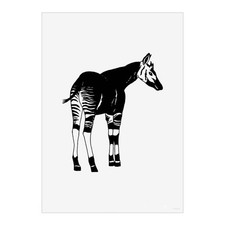
Among all the examples used by Bernard Heuvelmans and later cryptozoologists, none became more influential than the okapi. The animal’s discovery seemed to demonstrate a simple lesson: science does not know everything, and local communities may possess accurate knowledge of animals that outsiders have never documented. For supporters of cryptozoology, the okapi showed why reports of unknown creatures should not be dismissed automatically. Yet the same case also revealed an equally important limitation. The okapi was not accepted because stories existed about it; it was accepted when physical specimens allowed zoologists to examine, classify and verify the animal. The okapi therefore became both a symbol of scientific open-mindedness and a reminder that evidence, not possibility alone, changes scientific knowledge.[Wikipedia+2Tetrapod Zoology]WikipediaOpen source on wikipedia.org.
Why Once-Unknown Animals Mattered to Heuvelmans
How the Okapi Supported Local-Knowledge Arguments
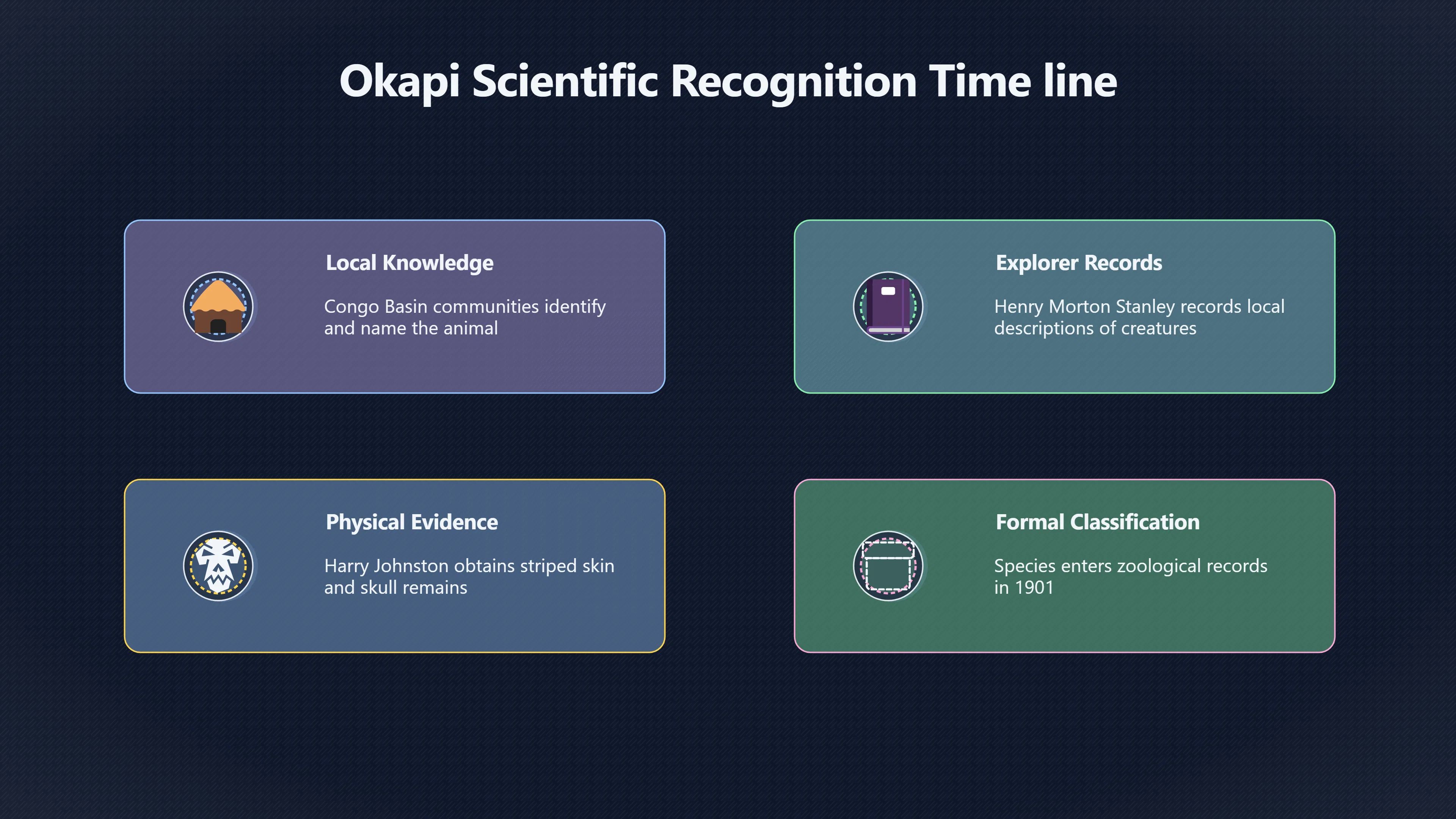
One reason the okapi became so important is that its discovery involved information supplied by people who already knew the animal existed. Long before zoologists classified Okapia johnstoni, communities in the Congo Basin were familiar with it and had names for it. Explorers such as Henry Morton Stanley recorded descriptions from local people during the late nineteenth century, and these accounts later guided further investigation.[Wikipedia]WikipediaOpen source on wikipedia.org.
The story challenged a common assumption that scientific discovery begins only when professional scientists encounter something directly. In the okapi case, local knowledge preceded formal recognition. Harry Johnston’s interest in the animal was strengthened by information provided by Indigenous inhabitants of the region, who identified tracks and described the creature’s habits. Johnston initially expected a horse-like animal, but local evidence pointed toward something different.[Wikipedia]WikipediaOpen source on wikipedia.org.
For Heuvelmans, this sequence mattered. It suggested that folklore, testimony and regional traditions should not automatically be treated as fantasy. Witnesses living alongside an animal may possess accurate information even when outsiders remain sceptical. The okapi therefore became a powerful example in arguments that cryptozoologists should pay attention to local reports rather than dismiss them outright.[Cryptozoology Museum]cryptozoologymuseum.comCryptozoology MuseumWhat is Cryptozoology?Cryptozoology is the study of hidden animals (whether large or small), to date not formally rec…
At the same time, the okapi story is often misunderstood. It was not a legendary monster known only through vague sightings. Local people were describing a real animal they encountered within their environment. Modern critics of the cryptozoological use of the okapi frequently note that the animal’s existence was never mysterious to those who lived where it occurred; it was primarily unknown to European science.[Reddit]reddit.comOkapi: r/CryptozoologyOkapi: r/CryptozoologyJune 18, 2025 — It is not really correct that the okapi was "considered a cryptid" (the idea of cryptids cam…
Why Specimens Changed the Okapi’s Scientific Status
The Real Lesson of the Okapi Analogy
The okapi remains cryptozoology’s favourite historical example because it contains two lessons that are easy to separate but difficult to balance.
First, it shows that scientific knowledge is incomplete. New species can be discovered, and local or Indigenous knowledge may preserve accurate information long before formal recognition. Dismissing every unfamiliar report simply because it sounds unusual is poor scientific practice.[Wikipedia]WikipediaOpen source on wikipedia.org.
Second, it shows why evidence standards matter. The okapi entered zoology only when physical specimens allowed independent verification. Its discovery supports investigation, not credulity. The fact that one once-unrecognised animal proved real does not mean that every reported lake monster, giant ape or sea serpent has the same evidential status.[ResearchGate]researchgate.net379174634 Heuvelmans the Heretic and Hidden AnimalsResearchGate(PDF) Heuvelmans the Heretic and Hidden Animals30 Mar 2024 — Cryptozoology seeks to study 'hidden animals' by separating 'met…
That tension explains why the okapi continues to occupy a unique place in discussions of Heuvelmans and the origins of modern cryptozoology. It is the strongest argument for keeping an open mind—and one of the strongest arguments for demanding proof.[Cryptid Archives]cryptidarchives.fandom.comCryptid Archives Okapi | Encyclopaedia of CryptozoologyCryptid ArchivesOkapi | Encyclopaedia of Cryptozoology - FandomThe okapi (Okapia johnstoni) is a species of giraffid mammal endemic to tr…
eBay marketplace picks
Marketplace Samples
Live-tested eBay searches with available results related to this page.


Endnotes
1.
Source: Wikipedia
Link:https://en.wikipedia.org/wiki/Okapi
2.
Source: researchgate.net
Title: 379174634 Heuvelmans the Heretic and Hidden Animals
Link:https://www.researchgate.net/publication/379174634_Heuvelmans_the_Heretic_and_Hidden_Animals
3.
Source: the-scientist.com
Title: The Scientist Tales from the cryptozoologists
Link:https://www.the-scientist.com/tales-from-the-cryptozoologists-49388
4.
Source: cryptozoologicalreferencelibrary.files.wordpress.com
Title: heuvelmans 1982
Link:https://cryptozoologicalreferencelibrary.files.wordpress.com/2020/08/heuvelmans-1982.pdf
5.
Source: reddit.com
Title: Okapi: r/Cryptozoology
Link:https://www.reddit.com/r/Cryptozoology/comments/1leqfcv/okapi/
6.
Source: youtube.com
Title: Real Cryptids: OKAPI! | Lindsay Nikole
Link:https://www.youtube.com/watch?v=aHaF0RqvWRk
7.
Source: tetzoo.com
Title: the discovery of the okapi part 1
Link:https://tetzoo.com/blog/2023/4/11/the-discovery-of-the-okapi-part-1
8.
Source: cryptidarchives.fandom.com
Title: Cryptid Archives Okapi | Encyclopaedia of Cryptozoology
Link:https://cryptidarchives.fandom.com/wiki/Okapi
9.
Source: cryptozoologymuseum.com
Link:https://cryptozoologymuseum.com/what-is-cryptozoology/
10.
Source: cryptidz.fandom.com
Link:https://cryptidz.fandom.com/wiki/Okapi
Additional References
11.
Source: facebook.com
Link:https://www.facebook.com/columbuszoo/posts/for-years-the-okapi-was-considered-a-myth-because-of-the-difficulty-in-spotting-/10156036951762106/
12.
Source: nationalgeographic.com
Link:https://www.nationalgeographic.com/animals/mammals/facts/okapi
13.
Source: facebook.com
Link:https://www.facebook.com/LAZoo/posts/the-endangered-okapi-is-found-in-the-dense-tropical-ituri-forest-located-in-the-/710356784456251/
14.
Source: youtube.com
Link:https://www.youtube.com/watch?v=3qHl3nsyqmw
15.
Source: wearethemutants.com
Title: impossible animals bernard heuvelmans and the making of cryptozoology
Link:https://wearethemutants.com/2020/10/06/impossible-animals-bernard-heuvelmans-and-the-making-of-cryptozoology/
16.
Source: sczarn.medium.com
Title: the mythical creature that came to life 4764f9c8e8cb
Link:https://sczarn.medium.com/the-mythical-creature-that-came-to-life-4764f9c8e8cb
17.
Source: blogs.iu.edu
Title: Yet, its closest genetic link is giraffes
Link:https://blogs.iu.edu/sciu/2020/12/12/seven-cryptids-species/
18.
Source: tetzoo.com
Title: the discovery of the okapi part 2
Link:https://tetzoo.com/blog/2023/4/28/the-discovery-of-the-okapi-part-2
19.
Source: jimconnors.net
Link:https://jimconnors.net/interesting-things-with-jc/2025/10/28/vnypbyk5y3bhtady5nrdn0cmh8n4td
20.
Source: okapi.uni-frankfurt.de
Link:https://okapi.uni-frankfurt.de/index.php?title=OKAPI%3A%C3%9Cber_OKAPI
Topic Tree