Within Cryptozoology
Why Cryptozoology Did Not Become Zoology
The International Society of Cryptozoology tried to make the field look scientific, but recognition by zoology never followed.
On this page
- The society's professional ambitions
- Journals, meetings, and credibility signals
- Why institutions stayed sceptical
Page outline Jump by section
Introduction
The International Society of Cryptozoology was the most explicit attempt to turn cryptozoology from a loose culture of monster-hunting, field reports and popular books into something that resembled a scientific speciality. Founded in Washington, DC, in January 1982, at a Smithsonian National Museum of Natural History meeting, it tried to give the subject officers, membership, a peer-reviewed journal, a newsletter and a disciplined definition of what counted as a zoological mystery. Its ambition was not simply to celebrate Bigfoot, lake monsters or surviving prehistoric creatures, but to create a professional home for claims about “hidden animals” that might be assessed by biological standards.[ResearchGate]researchgate.netOpen source on researchgate.net.
That professionalisation failed. The society produced real credibility signals — especially the journal Cryptozoology — but it did not persuade mainstream zoology to treat cryptozoology as a recognised branch of animal biology. The problem was not just public ridicule. It was structural: most cryptid claims remained dependent on indirect evidence, the field’s boundaries blurred into paranormal and folklore-driven material, and the society itself ended amid financial strain and internal dispute.[ResearchGate]researchgate.netOpen source on researchgate.net.
The society’s professional ambitions
The International Society of Cryptozoology matters because it shows that cryptozoology was not always only an internet subculture or entertainment genre. Its founders wanted to organise the search for disputed animals around the habits of professional science: defining a research object, creating a forum for publication, and attracting trained zoologists, biologists and museum-linked researchers who were interested in unusual animal reports but wary of the subject’s reputation.[ResearchGate]researchgate.netOpen source on researchgate.net.
The society was founded on 8–9 January 1982 in the Department of Vertebrate Zoology at the Smithsonian’s National Museum of Natural History. The key organisers were Roy P. Mackal of the University of Chicago and J. Richard Greenwell of the University of Arizona, while Bernard Heuvelmans, the central theorist of modern cryptozoology, became the society’s emblematic intellectual figure.[ResearchGate]researchgate.netOpen source on researchgate.net.
Its professional ambition rested on a specific claim: cryptozoology should be a subdiscipline of zoology and animal biology, not a paranormal pursuit. In that framing, a “hidden animal” was not a ghost, omen or magical creature. It was an animal whose existence was not yet accepted by science but was suggested by testimony, local knowledge, tracks, photographs, hair, skins, carcass fragments or other indirect evidence. The aim was to sort those leads carefully enough that a real animal, if present, could eventually be found, described and placed within taxonomy.[ResearchGate]researchgate.netOpen source on researchgate.net.
That framing was a governance strategy. The society was trying to police the boundary between cryptozoology and the wider “strange phenomena” marketplace. If cryptozoology could be defined as a disciplined investigation of flesh-and-blood animals, then it might be separated from UFOs, occult creatures, supernatural monsters and purely folkloric beings. In practice, that boundary was never stable enough to win broad institutional trust.[ResearchGate]researchgate.netOpen source on researchgate.net.
Journals, meetings and credibility signals
The society’s most important credibility signal was its journal, Cryptozoology: Interdisciplinary Journal of the International Society of Cryptozoology. Library records list it as an annual periodical published by the society in Tucson, Arizona, with the first volume appearing in winter 1982, the ISSN 0736-7023, and holdings for volumes 1–12 covering 1982–1996.[siris-libraries.si.edu]siris-libraries.si.eduOpen source on si.edu.
This mattered because a journal is one of the main institutions by which a field says, “We have standards.” Cryptozoology published papers, field reports and news, and the society also circulated The ISC Newsletter. Later surveys describe the journal as peer-reviewed, and the Online Books Page records the full run from 1982 to 1996, with all twelve volumes preserved in the Archives for the Unexplained.[ResearchGate+2Online Books Page]researchgate.netOpen source on researchgate.net.
The format imitated the outward structure of a scientific field:
- A named organisation: the International Society of Cryptozoology provided a central body rather than leaving the subject to scattered enthusiasts.
- A journal: Cryptozoology gave researchers a place to publish claims, arguments and field reports.
- A newsletter: The ISC Newsletter allowed members to circulate updates and community news.
- A professional definition: the society promoted cryptozoology as a branch of animal biology concerned with unusual or unexpected animals, not with supernatural beings.
- Institutional proximity: the founding meeting’s Smithsonian setting and the participation of scientists and museum-linked figures gave the project a seriousness that later cryptid culture often lacked.[ResearchGate]researchgate.netOpen source on researchgate.net.
Yet these signals were never the same as full professional recognition. A specialist journal can create a venue, but it does not automatically create a discipline. For zoology to absorb cryptozoology, cryptozoological work had to produce specimens, reproducible observations, genetic evidence, or clearly documented populations. Most famous cryptid claims continued to sit on the wrong side of that evidential threshold.
Why institutions stayed sceptical
The central reason zoological institutions stayed sceptical was that cryptozoology’s claims usually began with indirect evidence. Heuvelmans’ model treated local reports, witness statements, tracks, photographs, hair and other traces as legitimate starting points, but in zoology these are preliminary clues rather than final proof. A new species becomes zoologically real through stronger evidence: specimens, diagnostic physical remains, DNA, repeatable observation, ecological documentation and formal description.[ResearchGate]researchgate.netOpen source on researchgate.net.
That created a mismatch between cryptozoology’s preferred research object and zoology’s validation system. Cryptozoology was often most interested in animals before proof existed. Zoology was willing to describe new animals after proof crossed a much higher threshold. The society tried to occupy the middle ground, but that middle ground was hard to institutionalise. A field built around uncertain leads can be useful as a scouting activity, yet still fail to become a recognised scientific discipline.
A second problem was reputation. The society’s own advocates recognised a distinction between cryptozoology as the study of possible real animals and “crypto-zoology” as an esoteric or hidden zoology associated with supernatural explanation. The difficulty was that public culture did not maintain that separation. Through the 1970s and 1980s, paranormal investigators and popular writers increasingly folded mysterious animals into a broader market of strange phenomena, making it harder for the society’s more zoological programme to define the field in public.[ResearchGate]researchgate.netOpen source on researchgate.net.
A third problem was the response from the academic world. One review of the field notes that the society and its journal received a “lukewarm” academic response and that cryptozoology remained little recognised by universities and scientific institutions. Even sympathetic accounts concede that the society’s apparatus did not convert cryptozoology into a standard discipline comparable to mammalogy, ecology or taxonomy.[ResearchGate]researchgate.netOpen source on researchgate.net.
The okapi problem: the example that helped and hurt
The society’s emblem was the okapi, and the choice reveals both the strongest and weakest part of the professionalisation project. The okapi was known to local people in central Africa before it became familiar to European science, and it became a powerful example for cryptozoologists: large animals can be real even when outsiders have dismissed or ignored local reports.[Wikipedia]WikipediaInternational Society of CryptozoologyInternational Society of Cryptozoology
As a symbol, the okapi made sense. It reminded readers that the history of zoology includes surprises, missed evidence and animals whose existence was not quickly accepted by Western institutions. It also supported the cryptozoological claim that local knowledge and testimony should not be casually dismissed.
But the okapi also exposed the weakness of many cryptid comparisons. The fact that some animals were once unknown to European science does not make every reported animal plausible. Once okapi material reached scientific hands, the animal entered zoology through ordinary evidence. The professional gap for cryptozoology was not curiosity about unknown animals; zoologists already accept that unknown species exist. The issue was whether cryptozoological cases could regularly deliver the kind of evidence that turns a rumour, story or track into a recognised taxon.
This is why the society’s symbolism could not solve its credibility problem. The okapi showed that zoology can be incomplete. It did not show that Bigfoot, lake monsters or other celebrated cryptids were likely to be real, nor that cryptozoology had developed methods superior to ordinary field biology, taxonomy, conservation science or ethnozoology.
The collapse of the gatekeeping project
The International Society of Cryptozoology ended its activities in the late 1990s. A major review says the journal continued until 1998, when the society ceased activity because of internal dispute and financial problems; library and archive listings show the journal’s twelve-volume run ending with material covering 1993–1996.[ResearchGate+2siris-libraries.si.edu]researchgate.netOpen source on researchgate.net.
Its collapse mattered because the society had functioned as a gatekeeping attempt. It did not merely publish cryptid material; it tried to say which kinds of claims belonged in a zoological discussion and which belonged elsewhere. Without that central institution, cryptozoology became easier to absorb into broader popular culture: television monster-hunting, local tourism, internet forums, self-published investigations and fandom-like cryptid communities.
That does not mean the society represented a golden age of rigorous cryptozoology. Its standards still failed to win zoology over. But it did represent a more formal version of the field than much of what followed. Later writers on cryptozoology have continued to note the difference between scientists who are willing to examine unusual animal reports and enthusiasts who begin with belief and gather suggestive evidence around it.[ScienceBlogs]scienceblogs.comOpen source on scienceblogs.com.
The society’s failure therefore changed the centre of gravity. Cryptozoology did not disappear; it became less institutionally governed. The public face of the subject moved further from journal culture and closer to participatory media, where “cryptid” could mean a possible animal, a legend, a mascot, a horror creature, a meme or a local identity marker.
Why cryptozoology did not become zoology
The failure of the International Society of Cryptozoology was not simply a failure of branding. It revealed a deeper problem: professionalisation requires more than professional-looking structures. The society could create a journal, officers, meetings and definitions, but it could not make weak evidence behave like strong evidence.
Three barriers were decisive.
First, the evidential pipeline rarely reached the zoological endpoint. Cryptozoology often began with reports that were interesting but ambiguous. Zoology could accept those reports as leads, yet formal recognition required bodies, bones, tissue, DNA, diagnostic photographs, repeatable sightings or documented breeding populations.
Second, the field’s identity was unstable. The society wanted cryptozoology to mean the investigation of real, hidden animals. Public culture kept pulling it towards monsters, paranormal claims and mystery entertainment. That made it hard for universities, museums and journals outside the cryptozoological world to treat it as a clean biological category.[ResearchGate]researchgate.netOpen source on researchgate.net.
Third, genuine animal discovery already had established homes. When biologists discover new mammals, fish, reptiles, insects or deep-sea animals, they do not need cryptozoology to validate the work. They can publish through taxonomy, ecology, conservation biology, genetics or museum-based natural history. Cryptozoology’s distinctive territory was not “unknown animals” in general, but animals reported through uncertain and culturally charged evidence. That made it fascinating, but also institutionally vulnerable.
The result was a partial success and a larger failure. The International Society of Cryptozoology succeeded in documenting a serious moment in cryptozoology’s history, when some researchers tried to discipline the field through journals, definitions and peer review. It failed to make cryptozoology a recognised branch of zoology because the underlying claims did not consistently produce the kind of evidence zoology requires.
What the ISC left behind
The society’s legacy is clearest in archives rather than institutions. The complete journal run and newsletter material remain valuable records of how late twentieth-century cryptozoologists tried to argue, classify, publish and govern their subject. They show a field trying to move from anecdote towards procedure, even as it remained dependent on reports that mainstream science considered insufficient.[Internet Archive]archive.orgInternet Archive The ISC Journal Collection (International Society of Cryptozoology) : International Society of Cryptozoology : Free DownInternet Archive The ISC Journal Collection (International Society of Cryptozoology) : International Society of Cryptozoology : Free Down
The ISC also left behind a useful caution for readers of cryptozoology. Scientific style is not the same as scientific acceptance. A society can have officers, a journal, a newsletter and a careful vocabulary, yet still fail if its claims cannot survive independent verification. Conversely, dismissing every unusual animal report as foolish is also too crude. Some reports may point to misidentified known animals, escaped exotics, folklore, hoaxes, rare but real species, or genuinely useful local ecological knowledge.
The International Society of Cryptozoology sits at that boundary. It was the field’s most visible attempt to become zoology-adjacent rather than merely monster-adjacent. Its failure explains why cryptozoology today is usually discussed less as a recognised science than as a disputed zone between natural history, folklore, scepticism, popular media and the continuing hope that somewhere, in some forest, lake or archive of local knowledge, an animal still waits to be properly documented.
Amazon book picks
Further Reading
Books and field guides related to Why Cryptozoology Did Not Become Zoology. Use these as the next step if you want deeper reading beyond the article.
On the Track of Unknown Animals
Explains the intellectual ambitions behind cryptozoology as a discipline.
Why People Believe Weird Things
Addresses why controversial claims struggle for scientific acceptance.
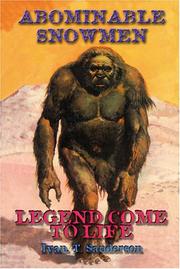
Abominable Snowmen
Shows how cryptozoological claims were framed in scientific language.
Mysterious creatures : a guide to cryptozoology. 2. [N - Z]
Covers the field, its institutions, and its recurring evidence problems.
eBay marketplace picks
Marketplace Samples
Live-tested eBay searches with available results related to this page.
Endnotes
1.
Source: researchgate.net
Link:https://www.researchgate.net/publication/288975639_A_Review_of_Cryptozoology_Towards_a_Scientific_Approach_to_the_Study_of_Hidden_Animals
2.
Source: siris-libraries.si.edu
Link:https://siris-libraries.si.edu/ipac20/ipac.jsp?profile=liball&source=~%21silibraries&uri=full%3D3100001~%21308002~%210
3.
Source: archive.org
Link:https://archive.org/details/The-[ISC-Journal
4.
Source: Wikipedia
Title: International Society of Cryptozoology
Link:https://en.wikipedia.org/wiki/International_Society_of_Cryptozoology
5.
Source: scienceblogs.com
Link:https://scienceblogs.com/tetrapodzoology/2011/06/10/zsl-cryptozoology-meeting
6.
Source: researchgate.net
Link:https://www.researchgate.net/publication/272351891_Cryptozoology_and_Pseudoscience
7.
Source: archive.org
Title: Encyclopedia+of+Urban+Legends+2nd+edition djvu.txt
Link:https://archive.org/stream/EncyclopediaOfUrbanLegends2ndEdition/Encyclopedia%2Bof%2BUrban%2BLegends%2B2nd%2Bedition_djvu.txt
8.
Source: archive.org
Link:https://archive.org/stream/LadyKrampus_gmail_WNMT/Tales_Part_06_djvu.txt
9.
Source: archive.org
Title: Jul 08 1985, The Times, #62184, UK (en) djvu.txt
Link:https://archive.org/stream/NewsUK1985UKEnglish/Jul%2008%201985%2C%20The%20Times%2C%20%2362184%2C%20UK%20%28en%29_djvu.txt
10.
Source: archive.org
Link:https://archive.org/stream/a-field-guide-to-otherkin/A%20Field%20Guide%20To%20Otherkin_djvu.txt
11.
Source: archive.org
Title: Fortean Times 02.2021 djvu.txt
Link:https://archive.org/stream/fortean-times-08.2021/Fortean%20Times%2002.2021_djvu.txt
12.
Source: cryptidarchives.fandom.com
Title: International Society of Cryptozoology
Link:https://cryptidarchives.fandom.com/wiki/International_Society_of_Cryptozoology
13.
Source: cryptidarchives.fandom.com
Title: Cryptozoology (journal)
Link:https://cryptidarchives.fandom.com/wiki/Cryptozoology_%28journal%29
14.
Source: cryptidarchives.fandom.com
Title: The Journal of Cryptozoology
Link:https://cryptidarchives.fandom.com/wiki/The_Journal_of_Cryptozoology
15.
Source: researchgate.net
Title: 379174634 Heuvelmans the Heretic and Hidden Animals
Link:https://www.researchgate.net/publication/379174634_Heuvelmans_the_Heretic_and_Hidden_Animals
16.
Source: researchgate.net
Title: 336083156 Cryptozoology as a Pseudoscience Beasts in Transition
Link:https://www.researchgate.net/publication/336083156_Cryptozoology_as_a_Pseudoscience_Beasts_in_Transition
17.
Source: researchgate.net
Title: 263067364 Cryptozoology in the Medieval and Modern Worlds
Link:https://www.researchgate.net/publication/263067364_Cryptozoology_in_the_Medieval_and_Modern_Worlds
18.
Source: si.edu
Link:https://www.si.edu/object/siris_sil_308002
19.
Source: Wikipedia
Link:https://en.wikipedia.org/wiki/Cryptozoology
20.
Source: Wikipedia
Title: International Society of Cryptozoology
Link:https://es.wikipedia.org/wiki/International_Society_of_Cryptozoology
21.
Source: Wikipedia
Link:https://zh.wikipedia.org/zh-cn/%E5%9C%8B%E9%9A%9B%E7%A5%9E%E7%A7%98%E5%8B%95%E7%89%A9%E5%AD%B8%E5%AD%B8%E6%9C%83
22.
Source: Wikipedia
Link:https://zh.wikipedia.org/zh-tw/%E5%9C%8B%E9%9A%9B%E7%A5%9E%E7%A7%98%E5%8B%95%E7%89%A9%E5%AD%B8%E5%AD%B8%E6%9C%83
23.
Source: onlinebooks.library.upenn.edu
Title: Online Books Page Cryptozoology archives
Link:https://onlinebooks.library.upenn.edu/webbin/serial?id=cryptozoology
24.
Source: reddit.com
Link:https://www.reddit.com/r/Cryptozoology/comments/1q36xnp/cryptozoology_inherent_or_practiced_pseudoscience/
25.
Source: occult-world.com
Title: international society of cryptozoology
Link:https://occult-world.com/international-society-of-cryptozoology/
26.
Source: idcrawl.com
Title: richard greenwell
Link:https://www.idcrawl.com/richard-greenwell
27.
Source: openwaterpedia.com
Title: International Society of Cryptozoology
Link:https://www.openwaterpedia.com/wiki/International_Society_of_Cryptozoology
28.
Source: unixploria.net
Link:https://unixploria.net/onewebmedia/Cryptozoology.pdf
29.
Source: gktoday.in
Title: international society of cryptozoology
Link:https://www.gktoday.in/international-society-of-cryptozoology/
30.
Source: books.google.com
Link:https://books.google.com/books/about/Cryptozoology.html?id=iWAbAQAAIAAJ
Additional References
31.
Source: youtube.com
Link:https://www.youtube.com/watch?v=s8UbntvF890
32.
Source: youtube.com
Title: RARE! Roy Mackal, Mokele-mbembe, giant snakes, dragons
Link:https://www.youtube.com/watch?v=_KdnTkq4q2s
33.
Source: academia.edu
Link:https://www.academia.edu/20109683/A_Review_of_Cryptozoology_Towards_a_Scientific_Approach_to_the_Study_of_Hidden_Animals_
34.
Source: proquest.com
Link:https://www.proquest.com/scholarly-journals/cryptozoology-medieval-modern-worlds/docview/202740117/se-2
35.
Source: facebook.com
Link:https://www.facebook.com/bigfootcrossroads/posts/do-you-think-cryptozoology-the-study-of-unknown-and-legendary-animals-will-ever-/1613643694102757/
36.
Source: reddit.com
Link:https://www.reddit.com/r/Cryptozoology/comments/1oox0mp/isc_newsletters_international_society_of/
37.
Source: isu.edu
Link:https://www.isu.edu/media/libraries/rhi/book-reviews/ICSJ-review.pdf
38.
Source: amazon.com
Link:https://www.amazon.com/Books-International-Society-Cryptozoology/s?rh=n%3A283155%2Cp_27%3AInternational%2BSociety%2Bof%2BCryptozoology&tag=searcht-20
39.
Source: scribd.com
Link:https://www.scribd.com/doc/127369358/Dendle-P-Cryptozoology-in-the-Medieval-and-Modern-Worlds
40.
Source: facebook.com
Link:https://www.facebook.com/groups/smartbigfoot/posts/9414714418560579/
Topic Tree