Within Coelacanth
Why One Fish Changed the Evidence Standard
The first living coelacanth mattered because it was a preserved body that experts could examine, not another ambiguous animal story.
On this page
- How the Chalumna catch reached the museum
- Why a specimen beat sightings and stories
- What Smith could verify from the preserved fish
Page outline Jump by section
Introduction
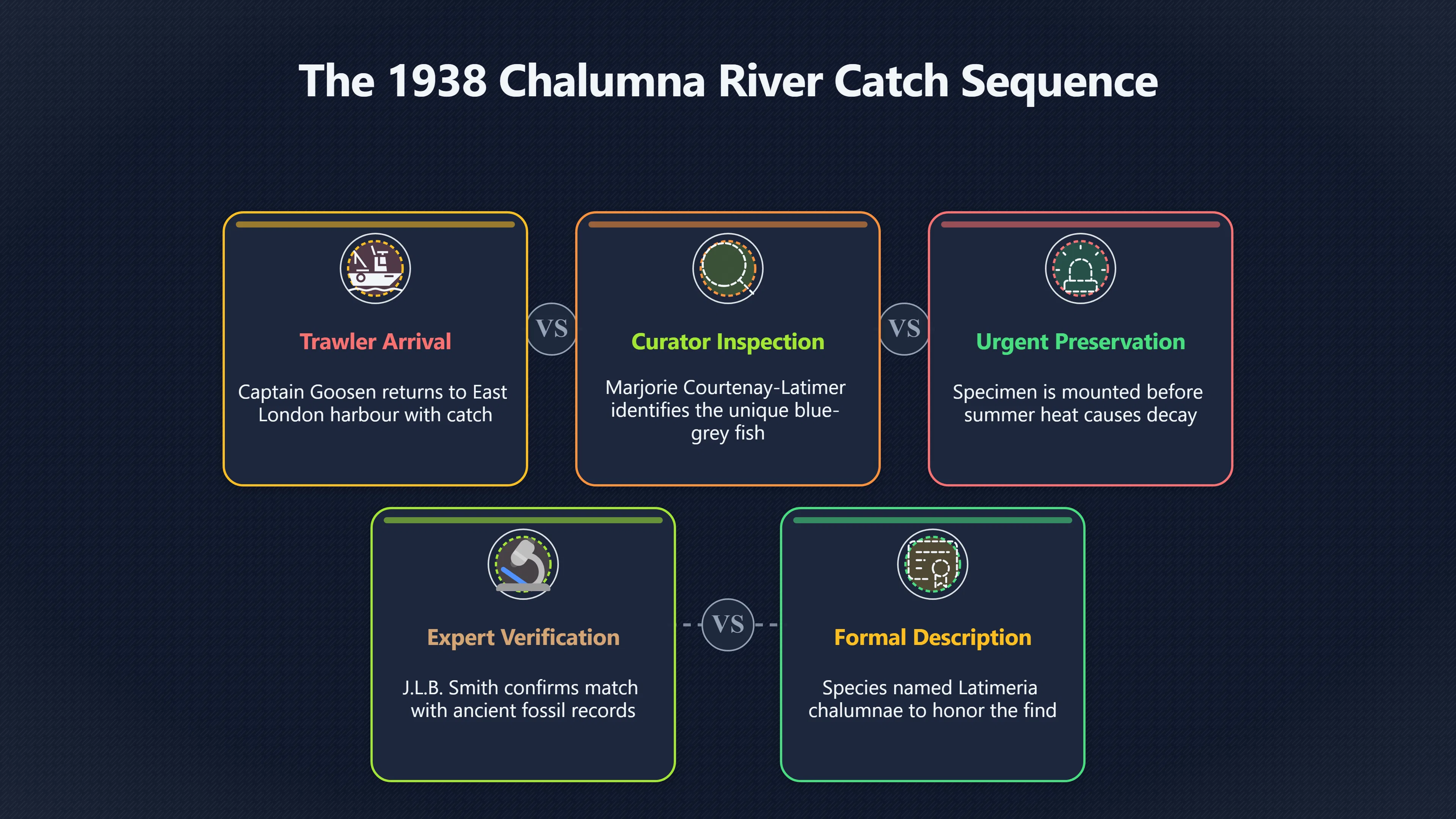
In cryptozoology, the 1938 coelacanth is often cited because it is one of the few famous cases where a seemingly extraordinary animal claim was settled not by stories, tracks, photographs or eyewitness reports, but by a physical specimen. The fish found near the mouth of South Africa’s Chalumna River was not a rumour waiting for confirmation. It was a body that could be preserved, measured, compared with fossils and examined by specialists. That distinction is why the case became so influential. The discovery did not prove that every hidden-animal claim is plausible. Instead, it demonstrated what decisive evidence looks like: a specimen that allows direct scientific verification.[Natural History Museum+2The Australian Museum]nhm.ac.ukNatural History MuseumCoelacanths: The fish that 'outdid' the Loch Ness MonsterSmith named the fish Latimeria chalumnae after Courtenay-L…
How the Chalumna Catch Reached the Museum
Why a Specimen Beat Sightings and Stories
The importance of the Chalumna fish lies in the type of evidence it provided. Cryptozoological claims frequently depend on witness testimony, folklore, fleeting observations or ambiguous photographs. Such evidence can suggest possibilities, but it rarely settles disputes because independent researchers cannot fully examine the original observation. The coelacanth case was different from the beginning.[Natural History Museum]nhm.ac.ukNatural History MuseumCoelacanths: The fish that 'outdid' the Loch Ness MonsterSmith named the fish Latimeria chalumnae after Courtenay-L…
A preserved specimen allowed scientists to inspect physical structures directly:<div class="content-enhancement content-enhancement--insight-grid" markdown="1">
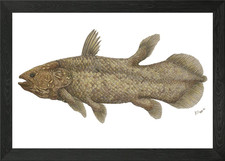
- The distinctive lobed fins characteristic of coelacanths.
- The unusual tail structure.
- The heavy scales and body proportions.
- Skeletal and anatomical features that could be compared with known fossil material.</div>
Because the fish existed as an object rather than a report, other specialists could review the evidence instead of relying on someone else’s interpretation. The claim that a supposedly extinct lineage still existed could therefore be tested rather than debated indefinitely. Smithsonian Ocean+2American Museum of Natural History[ocean.si.edu]ocean.si.eduSmithsonian OceanCoelacanth | Smithsonian OceanThe first living coelacanth was discovered in 1938 and bears the scientific name Latimeria…
This is the aspect of the discovery most relevant to cryptozoology. The coelacanth became famous not because scientists accepted an extraordinary claim on faith, but because a specimen supplied evidence strong enough to overcome scepticism.[The Australian Museum]australian.museumThe Australian MuseumCoelacanth, Latimeria chalumnae Smith, 1939by M McGrouther — The Coelacanth specimen caught in 1938 is still conside…
What Smith Could Verify from the Preserved Fish
Why One Fish Changed the Evidence Standard
The 1938 Chalumna specimen occupies a unique place in discussions of hidden or unexpected animals because it demonstrates the difference between possibility and proof. Before the catch, the existence of a living coelacanth would have seemed highly unlikely based on available evidence. After the catch, the question was no longer whether such a fish existed. Researchers could examine the specimen directly.[Natural History Museum]nhm.ac.ukNatural History MuseumCoelacanths: The fish that 'outdid' the Loch Ness MonsterSmith named the fish Latimeria chalumnae after Courtenay-L…
For cryptozoology, the lesson is narrower than often claimed. The coelacanth does not show that extraordinary animal reports are generally correct. It shows that extraordinary claims become convincing when supported by recoverable physical evidence. The discovery became one of the most celebrated zoological finds of the twentieth century precisely because it moved beyond stories and delivered something science could inspect, preserve and verify. The Australian Museum+2American Museum of Natural History[australian.museum]australian.museumThe Australian MuseumCoelacanth, Latimeria chalumnae Smith, 1939by M McGrouther — The Coelacanth specimen caught in 1938 is still conside…
Amazon book picks
Further Reading
Books and field guides related to Why One Fish Changed the Evidence Standard. Use these as the next step if you want deeper reading beyond the article.
Abominable Science!
"A sharp analysis of the quest for unreal critters―cryptids, as they are called―and the people who pursue them . . . entertaining and tho...
Dinosaurs
An award-winning encyclopedia written for young people but perfect for all ages, written to help everyone understand and appreciate the m...
The Search for the Last Undiscovered Animals
Discusses discoveries that moved from rumor to specimen.
eBay marketplace picks
Marketplace Samples
Live-tested eBay searches with available results related to this page.
Endnotes
1.
Source: australian.museum
Link:https://australian.museum/learn/animals/fishes/coelacanth-latimeria-chalumnae-smith-1939/
2.
Source: Wikipedia
Title: Marjorie Courtenay-Latimer
Link:https://en.wikipedia.org/wiki/Marjorie_Courtenay-Latimer
3.
Source: Wikipedia
Title: West Indian Ocean coelacanth
Link:https://en.wikipedia.org/wiki/West_Indian_Ocean_coelacanth
4.
Source: Wikipedia
Link:https://en.wikipedia.org/wiki/Latimeria
5.
Source: nhm.ac.uk
Link:https://www.nhm.ac.uk/discover/coelacanths-the-fish-that-outdid-the-loch-ness-monster.html
6.
Source: ocean.si.edu
Link:https://ocean.si.edu/ocean-life/fish/coelacanth
7.
Source: historytoday.com
Title: History Today Discovery of a Living Fossil
Link:https://www.historytoday.com/archive/months-past/discovery-living-fossil
8.
Source: lindahall.org
Title: marjorie courtenay latimer
Link:https://www.lindahall.org/about/news/scientist-of-the-day/marjorie-courtenay-latimer/
9.
Source: amnh.org
Link:https://www.amnh.org/explore/videos/shelf-life/coelacanth-discovery-preservation
10.
Source: facebook.com
Link:https://www.facebook.com/naturalhistorymuseum/posts/this-fish-swam-so-far-under-the-radar-for-66-million-years-people-thought-it-was/870335748465326/
11.
Source: nhm.at
Link:https://www.nhm.at/presse/top10/coelacanth
Additional References
12.
Source: researchgate.net
Link:https://www.researchgate.net/publication/314718630The_Coelacanth_Latimeria_chalumnae_Smith_1939_at_the_Natural_History_Museum_of_Comiso_taxidermic_preservation_and_notes_on_the_other_world[specimens
13.
Source: knysnamuseums.co.za
Link:https://www.knysnamuseums.co.za/pages/the-coelacanth/
14.
Source: facebook.com
Link:https://www.facebook.com/naturalhistorymuseum/posts/coelacanths-were-thought-to-have-gone-extinct-millions-of-years-ago-until-a-live/10157918631446537/
15.
Source: spacedaily.com
Title: Smith recognised, and why the popular
Link:https://spacedaily.com/t-in-december-1938-a-museum-curator-sifting-through-a-fishermans-catch-in-a-south-african-port-lifted-out-a-heavy-blue-fish-that-science-had-known-only-from-fossils-and-presumed-extinct-since-the-age/
16.
Source: from-bedroom-to-study.blogspot.com
Title: the eureka event of four legged fish
Link:https://from-bedroom-to-study.blogspot.com/2012/09/the-eureka-event-of-four-legged-fish.html
17.
Source: pbs.org
Link:https://www.pbs.org/wgbh/nova/fish/letters.html
18.
Source: youtube.com
Title: John E. Mc Cosker: Coelacanth | California Academy of Sciences
Link:https://www.youtube.com/watch?v=BlnPGxdgGqE
19.
Source: instagram.com
Title: DTk Lmb Lj8hx
Link:https://www.instagram.com/reel/DTkLmbLj8hx/?hl=en
20.
Source: instagram.com
Title: DUx Pa94jk Go
Link:https://www.instagram.com/reel/DUxPa94jkGo/?hl=en
21.
Source: facebook.com
Link:https://www.facebook.com/bbcworldservice/[photos
Topic Tree