Within Cryptozoology
What the Coelacanth Really Proves
The coelacanth proves surprising discoveries happen, but it does not make every cryptid claim equally likely.
On this page
- The 1938 living specimen
- Why the discovery mattered
- How cryptid arguments misuse it
Page outline Jump by section
Introduction
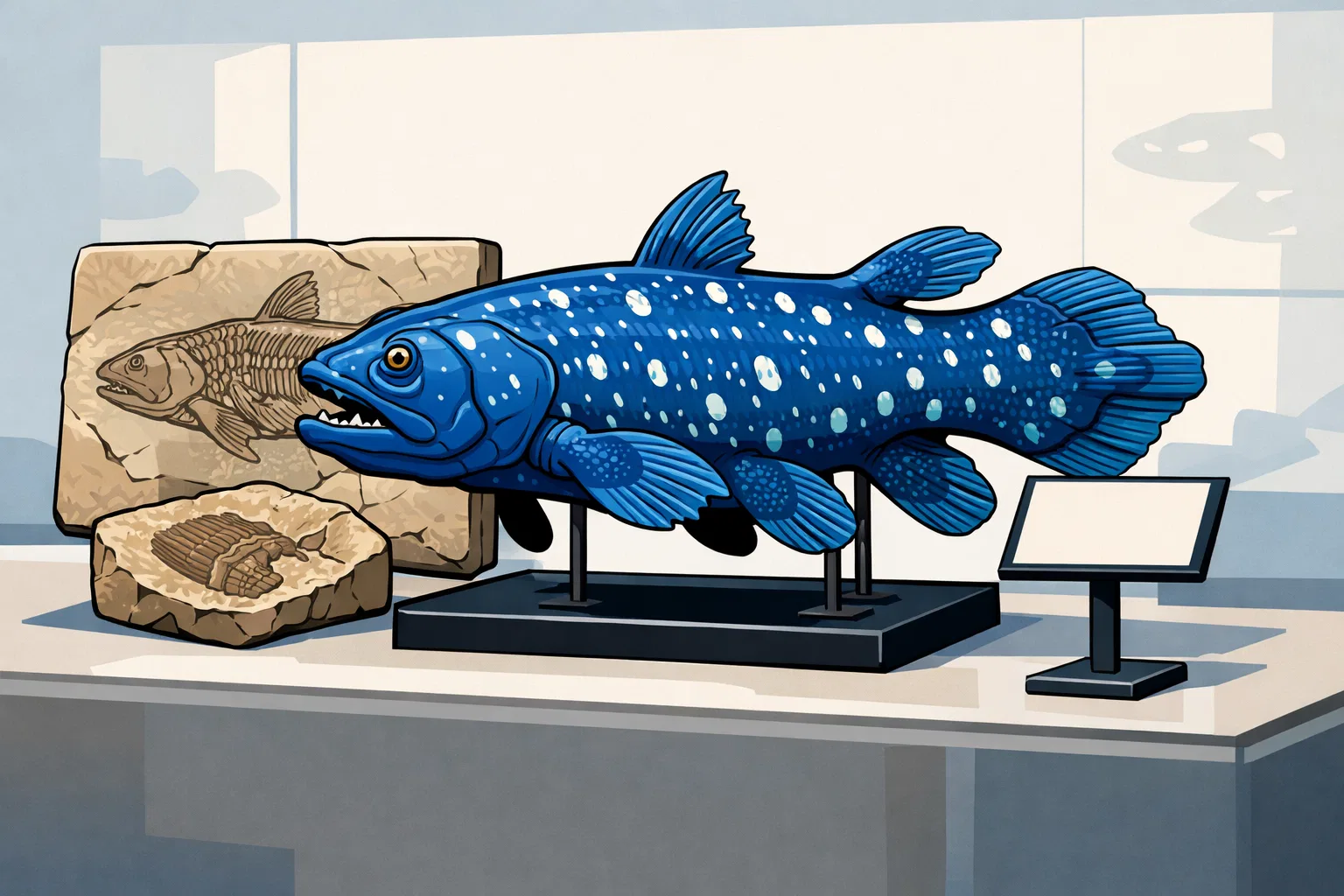
The coelacanth is the strongest real-world example behind one of cryptozoology’s favourite arguments: sometimes an animal thought lost, impossible or unknown to modern science really does turn up alive. In December 1938, a strange blue fish landed from a South African trawler, was noticed by museum curator Marjorie Courtenay-Latimer, and was later identified by J. L. B. Smith as a living coelacanth — a lineage then known only from fossils and widely assumed to have disappeared tens of millions of years earlier.[Natural History Museum+2Smithsonian Ocean]nhm.ac.ukDiscover the story of this strange fishNatural History MuseumCoelacanths: The fish that 'outdid' the Loch Ness MonsterCoelacanths were thought to have been extinct for 70 milli…
What the case proves, however, is narrower and more useful than the slogan “science was wrong” suggests. The coelacanth shows that the natural world can surprise experts, especially in poorly observed habitats such as deep water. It does not show that every famous cryptid is therefore likely. The lesson is not that extraordinary animal claims should be believed on romantic grounds, but that they should be tested against habitat, evidence, population biology, discovery history and the kind of physical specimen that made the coelacanth case decisive.
The 1938 Living Specimen
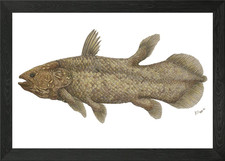
The modern coelacanth story begins not with a monster sighting, but with a body. On 22 December 1938, a fish caught near the mouth of the Chalumna River on South Africa’s east coast was brought in by Captain Hendrik Goosen and his crew. Courtenay-Latimer, curator of the East London Museum, recognised that it was unusual enough to preserve and document, even though the fishermen did not know its scientific importance.[The Australian Museum]australian.museumThe fish was caught in a shark gill net by Captain Goosen and hisThe Australian MuseumCoelacanth, Latimeria chalumnae Smith, 1939by M McGrouther — A Coelacanth was caught at the mouth of the Chalumna Ri…
That detail matters. Cryptozoological debates often begin with reports, silhouettes, footprints, stories, photographs or sonar traces. The coelacanth began with a specimen that could be examined. Courtenay-Latimer arranged for the fish to be saved as well as possible, contacted Smith, and sent him a drawing. Smith recognised the animal as a coelacanth, a type of lobe-finned fish previously known from the fossil record, and formally described it as Latimeria chalumnae in honour of Courtenay-Latimer and the Chalumna River.[Smithsonian Ocean+2Google Arts & Culture]ocean.si.eduSmithsonian OceanCoelacanth | Smithsonian OceanThe first living coelacanth was discovered in 1938 and bears the scientific name Latimeria…
The discovery was dramatic because coelacanths had long been treated as extinct. Popular accounts often say they vanished 66 or 70 million years ago, roughly the end of the Cretaceous period; museum and science sources use that shorthand to explain why the 1938 fish seemed so astonishing.[Natural History Museum+2Smithsonian Magazine]nhm.ac.ukDiscover the story of this strange fishNatural History MuseumCoelacanths: The fish that 'outdid' the Loch Ness MonsterCoelacanths were thought to have been extinct for 70 milli… But the word “extinct” here needs care. Scientists had not proved that no coelacanth could possibly exist anywhere. They had a fossil record with no recent specimens, and no recognised living representative. The 1938 fish overturned that absence of evidence by supplying direct evidence.
The story also did not end with a single lucky catch. A second recognised specimen was found in 1952 in the Comoros, confirming that the first fish was not a one-off anomaly or an error. Later records showed that living coelacanths occur in parts of the western Indian Ocean, while a separate Indonesian coelacanth, Latimeria menadoensis, was recognised after discoveries reported from Sulawesi in the late 1990s.[Academia+2Nature]academia.eduOpen source on academia.edu.
Why the Discovery Mattered
The coelacanth mattered because it changed a scientific category. Before 1938, coelacanths belonged to palaeontology: they were fossil fishes, familiar as ancient forms but absent from living faunas. After 1938, they also belonged to modern zoology, conservation biology, anatomy and genomics. That is a deeper shift than simply adding one odd fish to a list of species.
Coelacanths are lobe-finned fishes, part of a group relevant to the long evolutionary story of vertebrates moving from water to land. They are not “missing links” in the crude popular sense, and modern studies do not make them direct ancestors of land animals. Their value is that they are living members of a deep lineage whose anatomy and genes can be compared with fossils, lungfish and land vertebrates. Smithsonian Ocean notes that the first living species was described by Smith in 1939 and that living coelacanths are recognisable by their distinctive shape and lobed fins.[Smithsonian Ocean]ocean.si.eduSmithsonian OceanCoelacanth | Smithsonian OceanThe first living coelacanth was discovered in 1938 and bears the scientific name Latimeria…
The discovery also offered a rare chance to compare fossil appearance with living biology. Once scientists could examine living coelacanths, they learned about features that fossils alone cannot easily reveal: behaviour, habitat, reproduction, tissue, DNA and conservation status. The American Museum of Natural History, for example, highlights how the 1938 specimen became important not only as a discovery but as a preserved object through which later scientists could study anatomy and preservation history.[American Museum of Natural History]amnh.orgOpen source on amnh.org.
Modern research has complicated the romantic phrase “living fossil”. The coelacanth does preserve a body plan that looks strikingly ancient, but it is not a creature frozen outside evolution. Genome work reported in 2013 found that coelacanth genes have evolved relatively slowly compared with many other vertebrates, which helps explain why the fish appears conservative in form.[National Geographic]nationalgeographic.com130418 coelacanth genome evolution oceans animals science130418 coelacanth genome evolution oceans animals science At the same time, reviews and newer evolutionary studies caution that “living fossil” can mislead readers into imagining no change at all: coelacanths have continued to evolve in subtler anatomical and genetic ways.[Ovid+2PubMed]ovid.combies.201200145~why coelacanths are not living fossils a review of molecularbies.201200145~why coelacanths are not living fossils a review of molecular
That distinction is central to the cryptozoology lesson. The coelacanth was not a dinosaur, not a plesiosaur, and not an unchanged relic from a lost world. It was a living species in a surviving lineage with ancient relatives. Its discovery was extraordinary, but it still fitted biology: a deep-water fish, rarely encountered, living in a habitat where direct human observation had long been limited.
What “Living Fossil” Really Means
“Living fossil” is a memorable phrase, but it is also a trap. In ordinary language, it sounds like an organism has escaped evolution. In biology, it is better understood as a rough label for living organisms that strongly resemble ancient relatives, represent lineages with long fossil histories, or appear to have changed slowly in major body form.
For the coelacanth, the phrase works only if used carefully. Its discovery showed that a lineage known from ancient fossils could still have living representatives. It did not show that evolution stops, that fossils can be treated as snapshots of identical modern animals, or that any prehistoric-looking cryptid is plausible. The 2024 Nature Communications study on coelacanth evolution makes this balance explicit: coelacanths may be considered living fossils in the sense of lacking major recent innovations, but they have continued to evolve in more subtle features and in their DNA.[Nature]nature.comOpen source on nature.com.
This is why the coelacanth is a useful antidote to both overconfidence and credulity. It warns sceptics not to assume that the current catalogue of life is complete. But it also warns enthusiasts not to treat “old lineage” as “unchanged survivor”. A surviving coelacanth is not a loophole through which any prehistoric animal can be smuggled into the present.
The phrase also hides the role of environment. Coelacanths live in deep marine settings, often associated with caves and steep underwater slopes. Such habitats are hard to observe, and historically they were much less surveyed than rivers, farms, forests near settlements or tourist lakes. That does not make discovery easy, but it makes the surprise more biologically plausible than a breeding population of large, air-breathing animals supposedly living for centuries in a small, heavily visited lake.
How Cryptid Arguments Misuse It
The coelacanth is often invoked in cryptozoology as a courtroom exhibit: “Scientists thought this fish was extinct, then it was found alive; therefore Bigfoot, Nessie or surviving prehistoric reptiles might also be real.” The first clause is true. The leap after it is where the argument usually fails.
The stronger version of the lesson is comparative. The coelacanth case had several features that many famous cryptid claims lack:<div class="content-enhancement content-enhancement--insight-grid" markdown="1">
- A physical specimen: the decisive evidence was an actual fish, not only a sighting or tradition.
- A plausible hiding place: deep marine habitats are difficult to survey and can shelter rarely encountered species.
- A taxonomic fit: the animal, once examined, fitted within known fish anatomy and evolutionary history.
- Follow-up confirmation: later specimens and populations supported the original identification.
- Scientific correction: experts changed their view because the evidence was concrete, not because the claim was emotionally appealing.</div>
This does not make cryptozoological interest worthless. It means the standard is clearer. A surprising animal discovery becomes scientific when it produces evidence that can be preserved, examined, compared and independently checked. The coelacanth did not win acceptance by accumulating decades of ambiguous reports; it won acceptance because a real specimen forced zoology to update.
The contrast with lake monsters is especially sharp. The Natural History Museum’s own popular account frames the coelacanth as a fish that “outdid” the Loch Ness Monster, but the comparison is pointed: the coelacanth was not validated by legend. It was validated by a specimen from the sea.[Natural History Museum]nhm.ac.ukDiscover the story of this strange fishNatural History MuseumCoelacanths: The fish that 'outdid' the Loch Ness MonsterCoelacanths were thought to have been extinct for 70 milli… For a large unknown animal in a lake or forest, the evidential burden would be different. There should be carcasses, bones, environmental DNA, feeding traces, breeding evidence or repeated high-quality observations consistent with a viable population.
The coelacanth also shows why “absence from the fossil record” and “absence from modern records” are not the same. Fossilisation is patchy, especially in marine environments, and a lineage can vanish from known rocks while persisting in small or poorly sampled habitats. But a living large animal must still eat, reproduce, die and interact with its environment. The longer and closer humans observe that environment, the harder it becomes for a large breeding population to leave no testable trace.
The Better Lesson for Cryptozoology
The best cryptozoological use of the coelacanth is not as a blank cheque, but as a discipline. It asks better questions.
First, what kind of animal is being proposed? A deep-water fish, a small mammal in remote forest, and a giant land ape near settled areas do not have the same prior plausibility. New species are discovered all the time, but most are not large, spectacular animals hiding in plain sight. The coelacanth was large, but its deep-water ecology gave it a credible route to being missed.
Second, what would count as proof? In the coelacanth case, the answer was straightforward: a specimen that anatomists could examine. For a modern cryptid claim, proof might include a body, bones, tissue, clear DNA linked to an organism, or repeated observations by independent researchers. The coelacanth reminds readers that science is not offended by surprising animals. It accepts them when the evidence is strong enough.
Third, does the claim improve when compared with known discoveries, or only when wrapped in the romance of them? The okapi, giant squid, saola and coelacanth are often used in cryptozoological rhetoric because they are real animals that entered science late or dramatically. But each has its own discovery pathway, ecology and evidence. The coelacanth’s pathway was not “people told stories and scientists finally believed”; it was “a specimen appeared, was recognised, and was studied”.
Finally, the coelacanth shows that scientific humility and scepticism are not opposites. Humility says the oceans and forests are not fully known. Scepticism says claims still need evidence proportionate to their size. Together, they form a better rule than either dismissal or belief: surprising discoveries happen, but they become real through testable evidence.
A Real Surprise, Not a Universal Excuse
The coelacanth remains one of the great zoological discoveries of the twentieth century because it was both unexpected and solidly evidenced. A fish lineage known from fossils had living representatives. A museum curator noticed what others might have ignored. An ichthyologist recognised its significance. Later specimens, population records and modern genetic work turned a startling find into a durable scientific fact.[The Australian Museum+2Smithsonian Ocean]australian.museumThe fish was caught in a shark gill net by Captain Goosen and hisThe Australian MuseumCoelacanth, Latimeria chalumnae Smith, 1939by M McGrouther — A Coelacanth was caught at the mouth of the Chalumna Ri…
Its continuing story is also a conservation story, not merely a mystery. The African coelacanth is rare, protected under CITES Appendix I, and NOAA lists the Tanzanian distinct population segment as threatened under the US Endangered Species Act; FishBase records Latimeria chalumnae as Critically Endangered on the IUCN Red List.[NOAA Fisheries+2FishBase]fisheries.noaa.govafrican coelacanthafrican coelacanth The living fossil, once celebrated as a survivor from deep time, is still vulnerable to modern pressures such as accidental capture.
For cryptozoology, that is the final corrective. The coelacanth does not prove that famous cryptids are waiting to be vindicated. It proves that nature can still surprise us, that expert assumptions can be overturned, and that the difference between legend and zoology is evidence. Its real lesson is not “believe every hidden animal story”. It is “look carefully, preserve evidence, test claims, and be ready to change your mind when the specimen is real.”
Amazon book picks
Further Reading
Books and field guides related to What the Coelacanth Really Proves. Use these as the next step if you want deeper reading beyond the article.
Wonderful Life
Provides context for how scientists interpret major discoveries and evolutionary history.
Abominable Science!
"A sharp analysis of the quest for unreal critters―cryptids, as they are called―and the people who pursue them . . . entertaining and tho...
The Search for the Last Undiscovered Animals
Explores real and alleged discoveries of unknown animals.
eBay marketplace picks
Marketplace Samples
Live-tested eBay searches with available results related to this page.
Endnotes
1.
Source: australian.museum
Title: The fish was caught in a shark gill net by Captain Goosen and his
Link:https://australian.museum/learn/animals/fishes/coelacanth-latimeria-chalumnae-smith-1939/
2.
Source: artsandculture.google.com
Link:https://artsandculture.google.com/asset/marjorie-courtenay-latimer-and-coelacanth-courtesy-of-the-east-london-museum-south-africa/xAHib-jO571edA?hl=en
3.
Source: fisheries.noaa.gov
Title: african coelacanth
Link:https://www.fisheries.noaa.gov/species/african-coelacanth
4.
Source: academia.edu
Link:https://www.academia.edu/68289699/Coelacanth_Latimeria_chalumnae_Smith_1939_discoveries_and_conservation_in_Tanzania
5.
Source: nature.com
Title: news981001 1
Link:https://www.nature.com/articles/news981001-1
6.
Source: ovid.com
Title: bies.201200145~why coelacanths are not living fossils a review of molecular
Link:https://www.ovid.com/journals/bioe/pdf/10.1002/bies.201200145~why-coelacanths-are-not-living-fossils-a-review-of-molecular
7.
Source: nature.com
Link:https://www.nature.com/articles/s41467-024-51238-4
8.
Source: fishbase.se
Link:https://fishbase.se/summary/2063
9.
Source: fisheries.noaa.gov
Title: listing tanzanian dps african coelacanth threatened under endangered species act
Link:https://www.fisheries.noaa.gov/action/listing-tanzanian-dps-african-coelacanth-threatened-under-endangered-species-act
10.
Source: repository.library.noaa.gov
Title: noaa 66445 DS1
Link:https://repository.library.noaa.gov/view/noaa/66445/noaa_66445_DS1.pdf
11.
Source: repository.library.noaa.gov
Link:https://repository.library.noaa.gov/view/noaa/17113
12.
Source: fisheries.noaa.gov
Title: endangered species act status review report coelacanth latimeria chalumnae
Link:https://www.fisheries.noaa.gov/resource/document/endangered-species-act-status-review-report-coelacanth-latimeria-chalumnae
13.
Source: fisheries.noaa.gov
Title: tanzanian distinct population segment dps african coelacanth 5 year review 2025
Link:https://www.fisheries.noaa.gov/resource/document/tanzanian-distinct-population-segment-dps-african-coelacanth-5-year-review-2025
14.
Source: genome.gov
Link:https://www.genome.gov/Pages/Research/Sequencing/SeqProposals/CoelacanthGenomeWhitePaper.pdf
15.
Source: smithsonian.com
Link:https://www.smithsonian.com/
16.
Source: conservation.org
Title: fish story how a coelacanth discovery set off a flurry of science subterfuge
Link:https://www.conservation.org/news/fish-story-how-a-coelacanth-discovery-set-off-a-flurry-of-science-subterfuge
17.
Source: nhm.ac.uk
Title: Discover the story of this strange fish
Link:https://www.nhm.ac.uk/discover/coelacanths-the-fish-that-outdid-the-loch-ness-monster.html
18.
Source: ocean.si.edu
Link:https://ocean.si.edu/ocean-life/fish/coelacanth
19.
Source: smithsonianmag.com
Title: 1930s curator discovered living fossil well sort 180967616
Link:https://www.smithsonianmag.com/smart-news/1930s-curator-discovered-living-fossil-well-sort-180967616/
20.
Source: amnh.org
Link:https://www.amnh.org/explore/videos/shelf-life/coelacanth-discovery-preservation
21.
Source: nationalgeographic.com
Title: 130418 coelacanth genome evolution oceans animals science
Link:https://www.nationalgeographic.com/animals/article/130418-coelacanth-genome-evolution-oceans-animals-science
22.
Source: pubmed.ncbi.nlm.nih.gov
Link:https://pubmed.ncbi.nlm.nih.gov/23382020/
23.
Source: dictionary.cambridge.org
Link:https://dictionary.cambridge.org/dictionary/english-chinese-traditional/natural
24.
Source: dictionary.cambridge.org
Link:https://dictionary.cambridge.org/dictionary/english/natural
25.
Source: Wikipedia
Link:https://en.wikipedia.org/wiki/Coelacanth
26.
Source: Wikipedia
Title: Indonesian coelacanth
Link:https://en.wikipedia.org/wiki/Indonesian_coelacanth
27.
Source: smithsonianmag.com
Link:https://www.smithsonianmag.com/
28.
Source: ecos.fws.gov
Link:https://ecos.fws.gov/ecp/species/10533
29.
Source: si.edu
Link:https://www.si.edu/
30.
Source: facebook.com
Link:https://www.facebook.com/naturalhistorymuseum/posts/this-fish-swam-so-far-under-the-radar-for-66-million-years-people-thought-it-was/870335748465326/
31.
Source: marinebio.org
Title: latimeria chalumnae
Link:https://www.marinebio.org/species/coelacanths/latimeria-chalumnae/
32.
Source: nhm.ac.uk
Title: 150 year old museum specimen revealed as missing link in evoluti
Link:https://www.nhm.ac.uk/press-office/press-releases/150-year-old-museum-specimen-revealed-as-missing-link-in-evoluti.html
Additional References
33.
Source: federalregister.gov
Link:https://www.federalregister.gov/documents/2015/03/03/2015-04405/endangered-and-threatened-wildlife-and-plants-proposed-rule-to-list-the-tanzanian-dps-of-african
34.
Source: pbs.org
Link:https://www.pbs.org/wgbh/nova/fish/letters.html
35.
Source: researchgate.net
Link:https://www.researchgate.net/publication/350467942_Coelacanth_discoveries_in_Madagascar_with_recommendations_on_research_and_conservation
36.
Source: researchgate.net
Link:https://www.researchgate.net/publication/260882715Indonesian%27King_of_the_Sea%27_discovered
37.
Source: aquamarine.or.jp
Link:https://www.aquamarine.or.jp/wp-content/uploads/2019/03/Full-Papers/27-FullPaper-IAC2018.pdf
38.
Source: researchgate.net
Link:https://www.researchgate.net/publication/287831556_First_capture_of_a_coelacanth_Latimeria_chalumnae_Smith_1939_Pisces_Latimeriidae_off_Kenya
39.
Source: researchgate.net
Link:https://www.researchgate.net/publication/314718630_The_Coelacanth_Latimeria_chalumnae_Smith_1939_at_the_Natural_History_Museum_of_Comiso_taxidermic_preservation_and_notes_on_the_other_world_specimens
40.
Source: researchgate.net
Link:https://www.researchgate.net/publication/341726045_The_Comoran_Coelacanth_Latimeria_chalumnae_Smith_1939_at_the_Natural_History_Museum_Sheikh_Abdullah_Al-Salem_Cultural_Centre_Hawally_State_of_Kuwait_Der_Komoren-Quastenflosser_Latimeria_chalumnae_Smit
41.
Source: instagram.com
Link:https://www.instagram.com/p/C3QInLgRU1o/?hl=en
42.
Source: reddit.com
Link:https://www.reddit.com/r/marinebiology/comments/10edbi4/claiming_that_coelacanths_are_living_fossils_is/
Topic Tree